A Collector's Guide
Chassis Types: The Anatomy of The Hilt
Lightsaber Chassis Types Explained — From Foam & PVC Tubing to Grand Master
Last updated: 9 May 2026
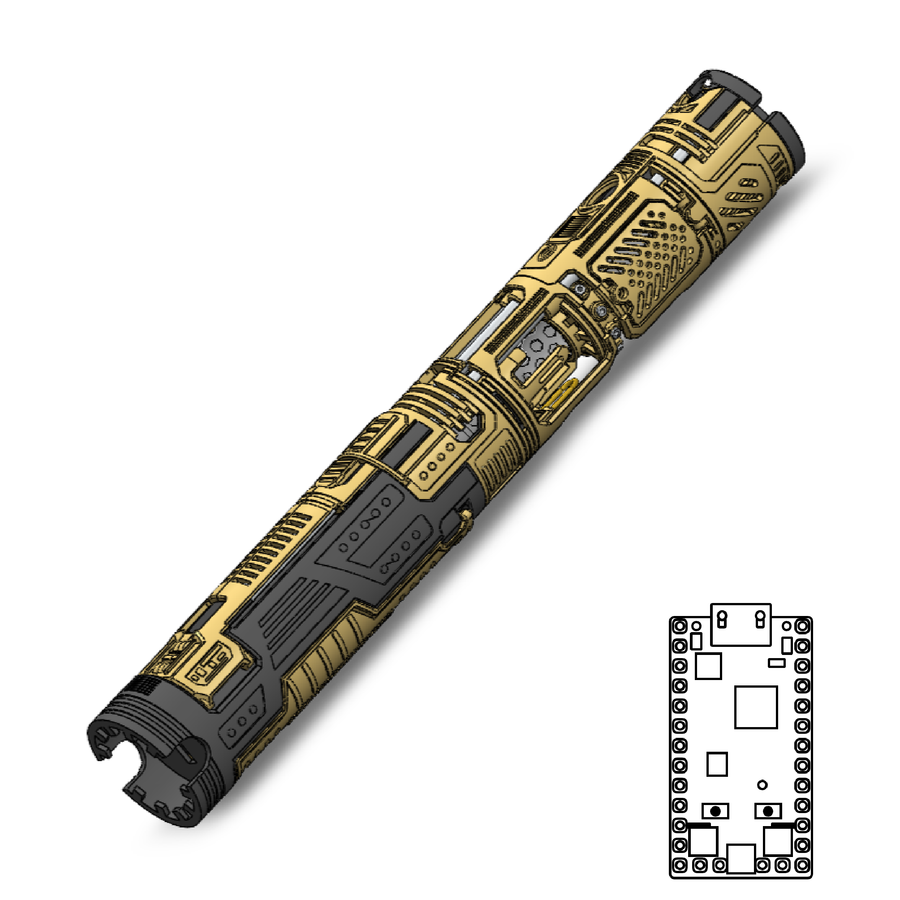
In the high-end lightsaber collecting hobby, what's on the inside is often just as important—and sometimes more expensive—than the hilt itself. The "chassis" is the internal framework that securely holds the delicate electronics: the soundboard, battery, speaker, switches, and wiring.
Without a chassis, these components would rattle around inside the metal hilt, leading to short circuits and broken wires. The chassis is not an afterthought—it is the engineering.
The world of high-end lightsaber collecting is characterized by intricate craftsmanship, evolving technology, and a complex nomenclature that can be difficult to navigate. This guide explores the evolution of chassis tiers across the hobby, the various non-metal materials used for their construction, and finally, a detailed breakdown of the proprietary tier system developed by GOTH-3Designs and KR Sabers (retailed through The Saber Armory).
The Evolution of the Chassis
The evolution of the chassis has moved from basic PVC pipes and electrical tape to highly engineered, 3D-printed, and CNC-machined works of art.
Before diving into specific brand ecosystems, it is important to understand the actual materials used to print the non-metal structural elements of a chassis. These vary widely across the broader lightsaber community and have evolved significantly over the past decade.
The Pre-3D Printing Era (Pre-2015)
In the early days of custom lightsabers (late 1990s through the early 2010s), 3D-printed chassis did not exist. Installers relied on what is colloquially known as the "tape and pray" method—wrapping electronics in foam or electrical tape and stuffing them into the hilt.
For structured internals, builders used cut PVC tubing, acrylic ribs, and threaded metal rods to create rudimentary chassis.
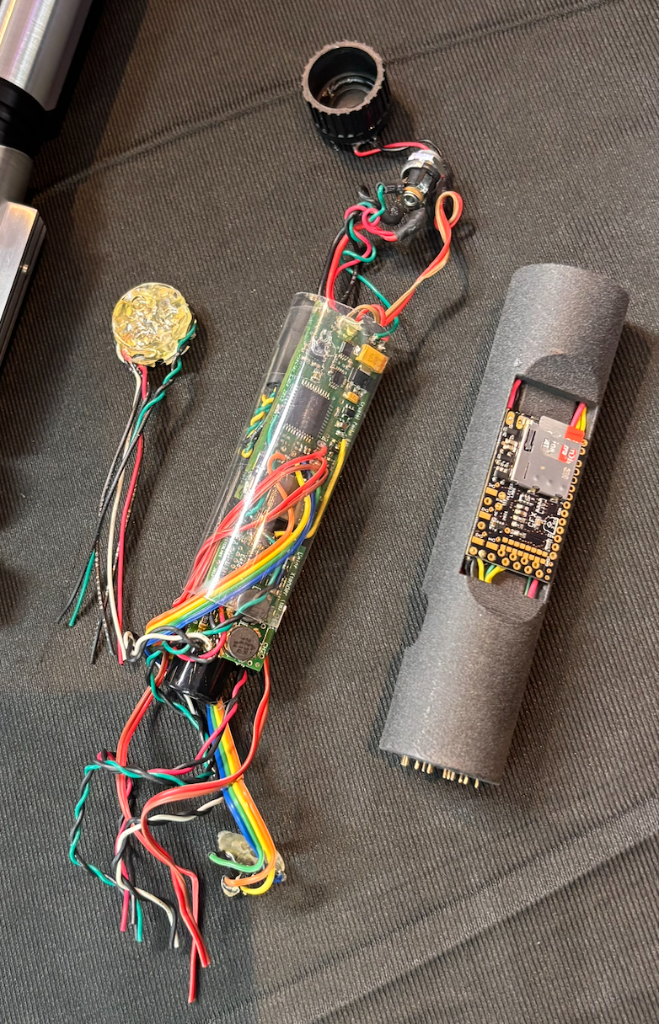

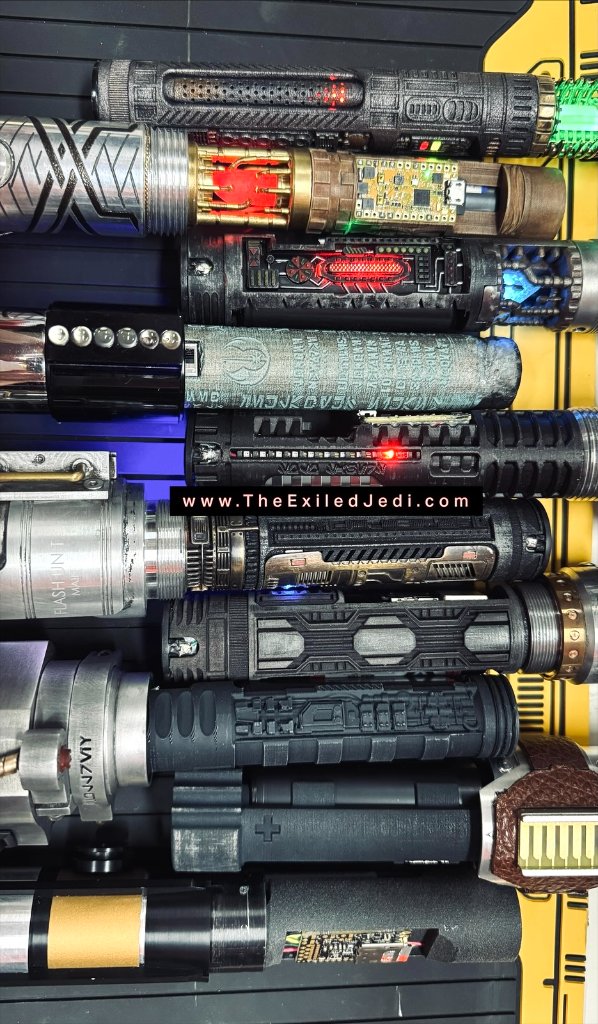
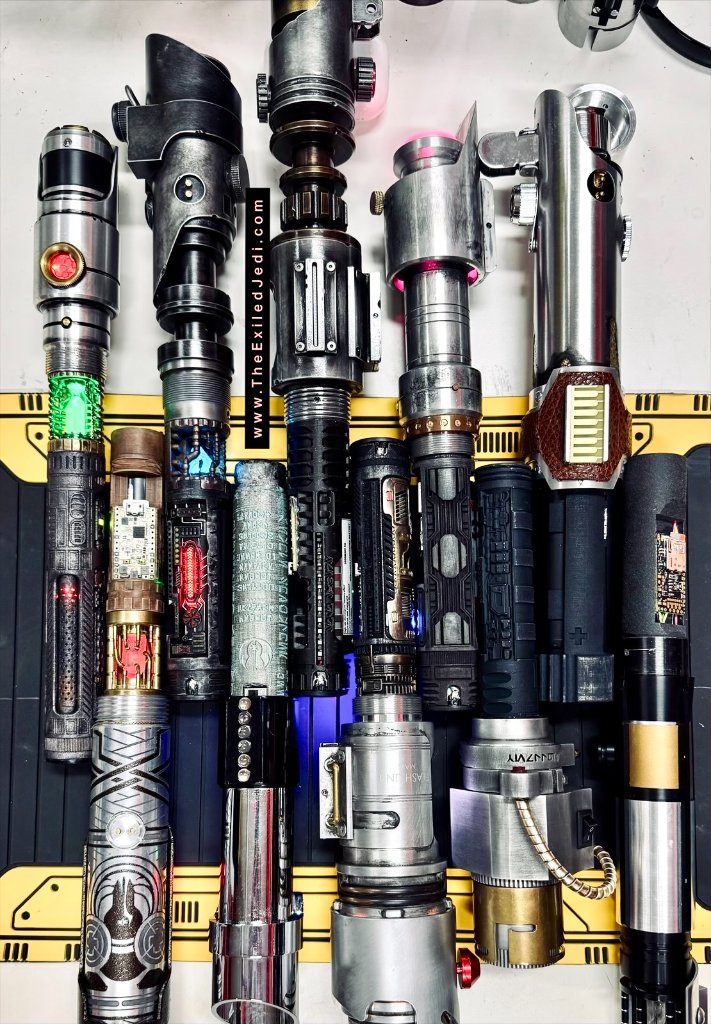
Image Source: TheExiledJedi. Different resin chassis built with different levels of sophistication and material qualities.
Chassis Materials
Industrial Powder Bed Materials (SLS and MJF)
Era: Dominant for premium builds from ~2015 to Present
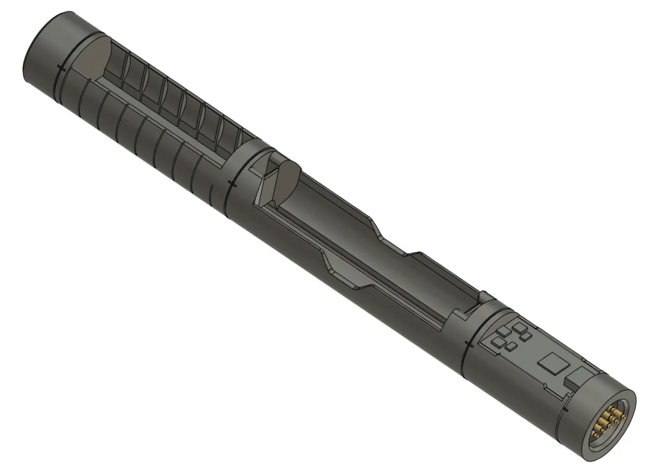
The entry point for most custom installations is the basic chassis. These are purely functional designs intended to hold the components securely without any decorative elements.
Typically 3D-printed in PLA or basic resin, it is a single, solid piece that slides into the lower half of the hilt. It features designated slots for the battery (usually an 18650 lithium-ion cell), a 24mm or 28mm speaker at the pommel, and a flat bed for the soundboard.
Advantages
- +Highly durable and affordable
- +Easy to install
- +Perfect for heavy dueling sabers
Limitations
- −No visual appeal
- −Wiring is often exposed or only partially hidden
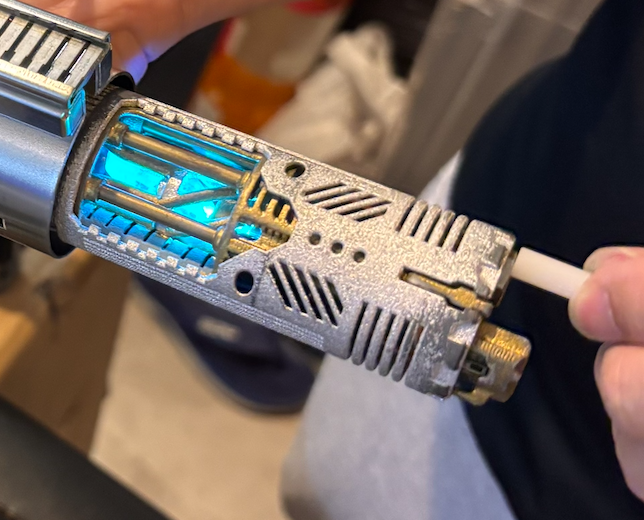
The true chassis revolution began around 2014–2015 when designers (notably GOTH-3Designs) began leveraging commercial 3D printing services like Shapeways. These services used powder-bed fusion technologies, which create isotropic parts (equally strong in all directions) capable of incredibly complex geometries without needing support structures.
- SLS PA11 (Nylon 11): Printed via Selective Laser Sintering, this bio-based nylon was the standard "premium" material for years (often sold by Shapeways as "Versatile Plastic"). It is highly durable, impact-resistant, and slightly flexible, typically featuring a grainy, sugar-like surface texture.
- MJF PA12 (Nylon 12): Printed via HP's Multi Jet Fusion technology, this petroleum-based nylon is stiffer and offers better dimensional stability. Crucially for chassis designers, MJF provides higher detail resolution and a less grainy surface finish, making it the current premium standard for high-end NYLON chassis parts. Today, with Shapeways having filed for bankruptcy in 2024, designers primarily use services like Craftcloud or JLCPCB to source these industrial nylon prints.
FDM (Fused Deposition Modeling) Materials
Era: Emerging ~2018, Currently the Most Common Material Overall
As desktop 3D printers became affordable and reliable (circa 2018 onwards), FDM printing—extruding melted filament layer by layer—became the standard for DIY builders and entry-level commercial chassis. Today, FDM PLA is overwhelmingly the most common chassis material in the hobby due to its accessibility and low cost.
- PLA (Polylactic Acid): The most common and affordable material used for home-printed chassis and entry-level commercial options. It is easy to print and dimensionally accurate. However, standard PLA has low heat resistance (softening around 60°C) and can warp if left in a hot car. It is also relatively brittle under impact.
- PETG (Polyethylene Terephthalate Glycol): A popular step up from PLA for DIY builders. It offers better impact strength and slightly improved heat resistance (around 80°C) while remaining relatively easy to print without an enclosure.
- ABS and ASA: These materials offer excellent heat resistance and impact strength, making them highly durable. However, they are less common for hobbyist chassis because they require enclosed 3D printers and proper ventilation to manage toxic fumes and prevent warping during the print process.
SLA (Stereolithography) Resin Materials
Era: Niche usage, primarily for decorative elements
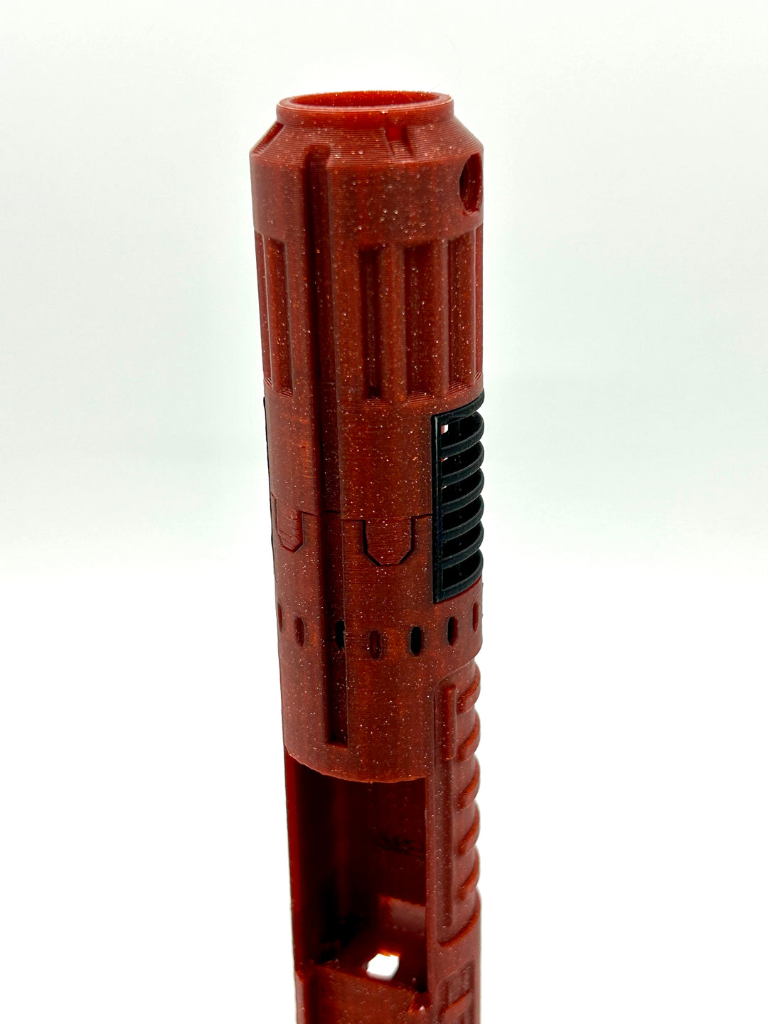
Resin printing uses UV light to cure liquid photopolymers, offering the highest possible detail and smooth, injection-mold-like finishes.
- Standard Resin: While capable of producing stunning detail for decorative elements (like faux wiring or crystal chamber accents), standard resin is highly brittle and possesses poor impact resistance. It is generally not recommended for the main structural body of a lightsaber chassis.
- Tough / ABS-Like Resins: Advanced engineering resins (such as Siraya Tech Fast ABS-Like) have been formulated to mimic the durability of ABS plastic. Some builders successfully use these tougher resins for structural chassis components, though they remain far less common than FDM PLA or SLS nylon for heavy-duty applications.
Other Non-Metal Materials
Beyond 3D printing, custom sabersmiths occasionally utilize other non-metal materials for specific chassis applications:
- Polycarbonate and Acrylic: While polycarbonate is the standard for the external blade, clear acrylic or polycarbonate tubing is sometimes used internally to create transparent sections of a chassis, allowing internal LEDs or crystal chambers to be viewed without exposing the electronics.
- Delrin (Acetal / POM): An engineering plastic known for its extreme dimensional stability, high strength, and low friction. Delrin cannot be easily 3D printed; instead, it is CNC machined or turned on a lathe. It is occasionally used by boutique sabersmiths for high-precision, heavy-duty chassis components.
From China – Convenient and Cheap: The Removable Core System
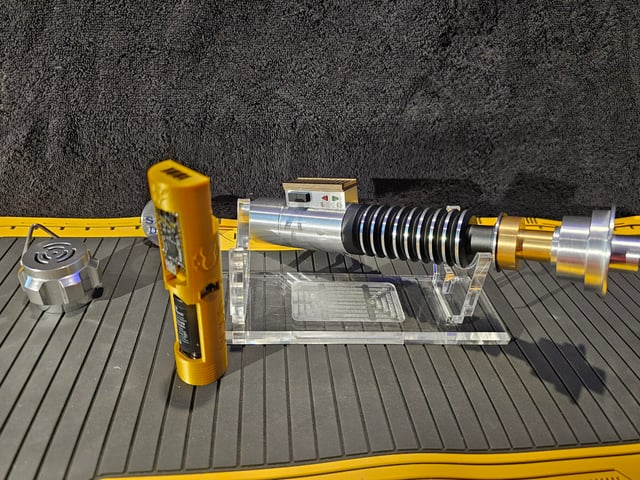
A major innovation in recent years is the "Removable Core" or "Power Core" system. Popularized by companies like Sabertrio, LGT/TXQ, and various independent installers, this design houses all the electronics in a self-contained, easily removable cylinder.
The core connects to the upper hilt (which houses the Neopixel emitter pins and switches) via a specialized PCB connector (often called a Pogo-Pin connector).
Limitations
- −Requires hilts specifically designed to accept that exact core standard; not viable for complex, thin-neck, or highly accurate replica hilts.
The Master Chassis
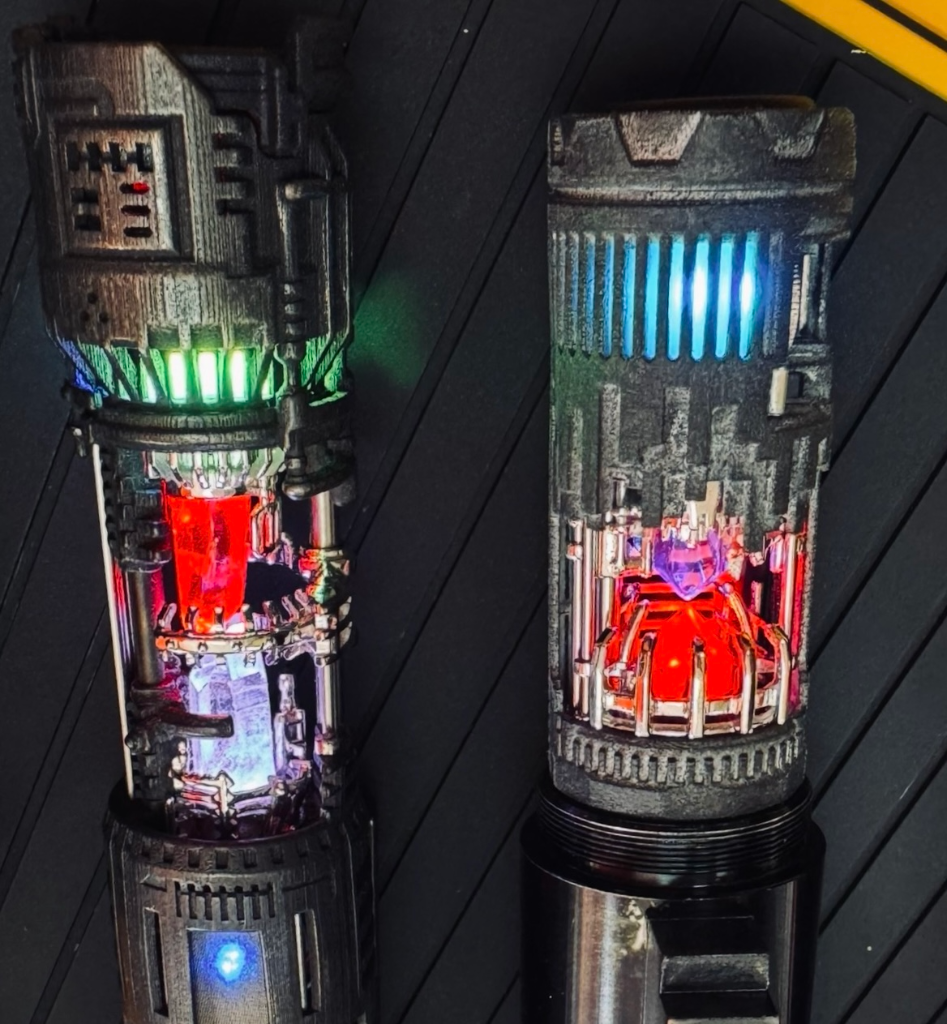
Moving into the realm of high-end prop collecting, we find the "Master Chassis." Pioneered by designers like GOTH-3Designs (Rick), the Master Chassis turns the internal electronics into a display piece in its own right.
Advantages
- +Stunning visual appeal
- +"Reveal" sections where the lower hilt unscrews to display the glowing crystal chamber
Limitations
- −Expensive
- −Requires a highly skilled installer due to tight tolerances and hidden wire paths
The Grand Master Chassis
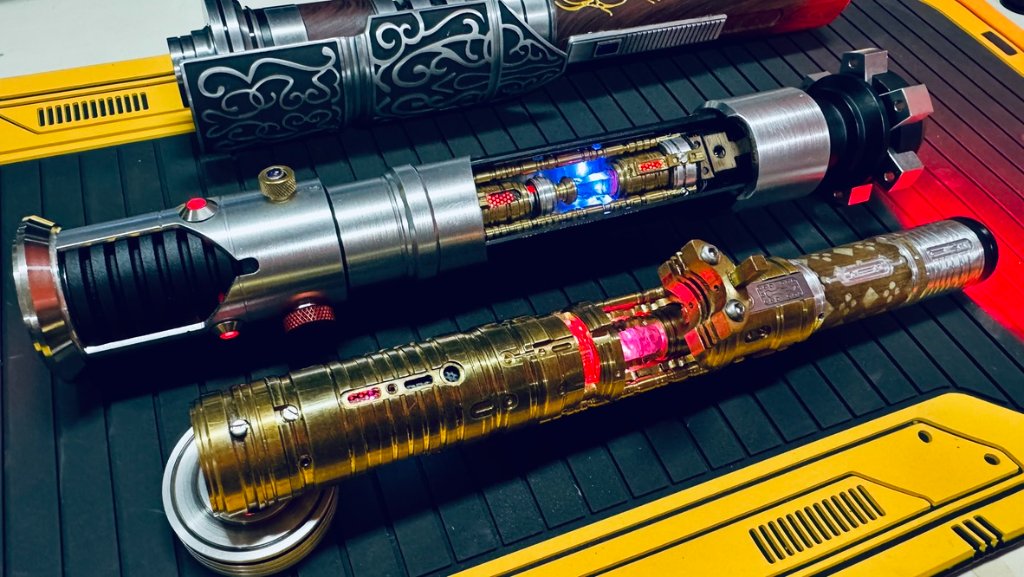
The absolute pinnacle of lightsaber internals is the "Grand Master" chassis. These are not just functional holders—they are kinetic sculptures.
These masterpieces utilize extensive metal components, including aluminum tubes, nickel-silver rods, and brass structural elements. A Grand Master chassis may feature dual micro motors operating at different speeds, multiple pixel rings, and dozens of neodymium magnets. The Grand Master variant often includes advanced features like a split chassis design that allows the user to physically remove and swap the kyber crystal.
Advantages
- +The ultimate collector's piece; museum-quality craftsmanship
- +Often appreciates in value
- +Moving crystal chambers and OLED displays create living works of art
Limitations
- −Exorbitantly expensive — often adding $1,000 to $3,000+ to the cost of the hilt
- −Incredibly fragile; absolutely not suitable for dueling or rough handling
The GOTH-3Designs & KR Sabers Ecosystem
When collectors discuss specific chassis "tiers"—such as ECO, ECO-Max, or ELITE—they are not referring to an industry-wide standard. Rather, they are almost exclusively referencing the proprietary ecosystem developed by GOTH-3Designs and KR Sabers, which is retailed directly to consumers through KR Sabers' storefront, The Saber Armory.
This specific trio operates in tandem: KR Sabers designs the empty hilts, GOTH-3Designs engineers the internal chassis architectures, and The Saber Armory sells the DIY kits and components. While other independent installers and chassis designers (such as Sabersense, ShtokCustomWorx, or MB Sabers) create exceptional metal chassis, they do not utilize this specific tiered naming convention.
This section explores the features, components, and complexities associated with each level of the GOTH-3Designs / KR Sabers tier system. While tier availability varies significantly depending on the specific hilt model, the general progression moves from basic functional 3D-printed designs to intricate, multi-material masterpieces.
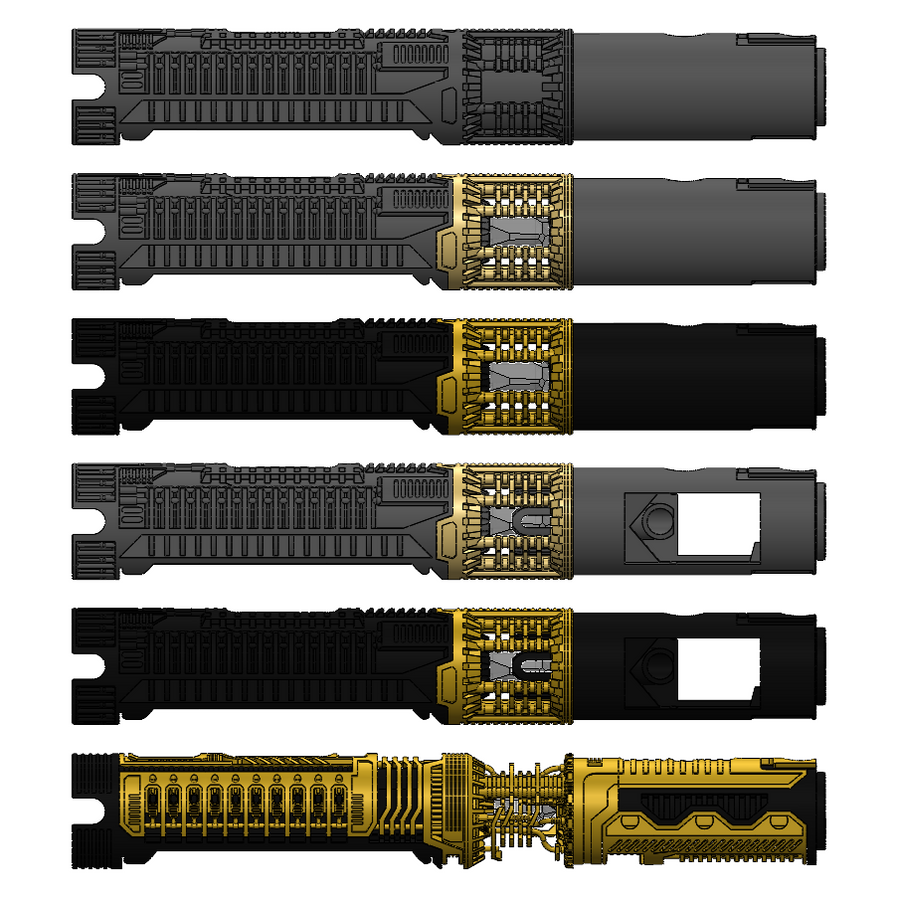
The ECO Tier Lineup
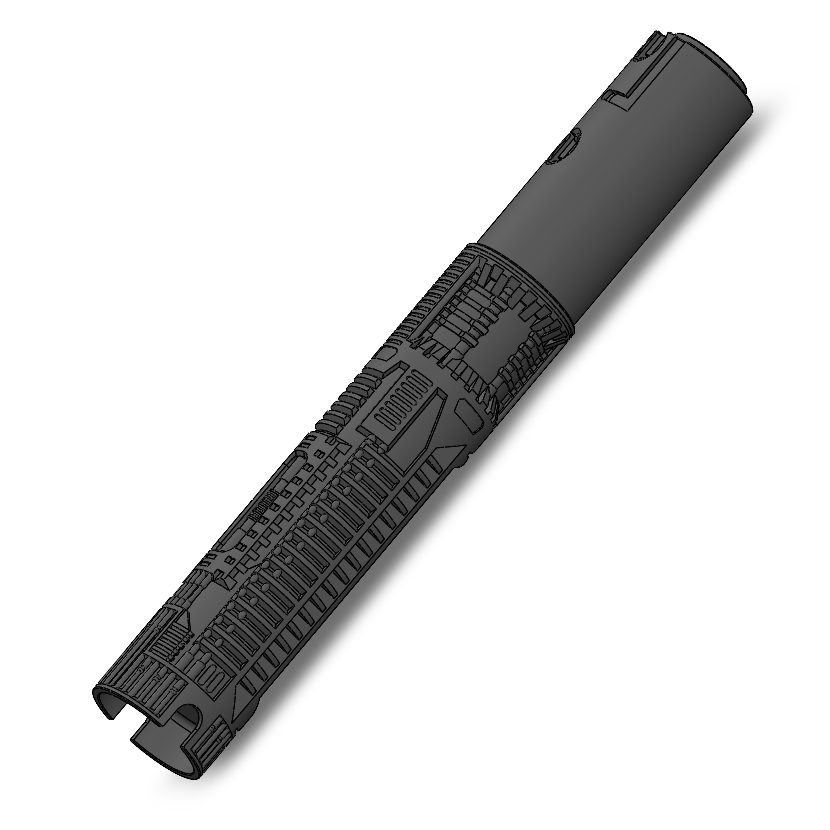
The ECO line represents the accessible entry point into custom chassis installations, focusing primarily on securing electronic components within a 3D-printed structure.
ECO (Also known as Padawan)
The standard ECO chassis is a straightforward, functional design intended solely to house the essential electronics. It is typically 3D printed in PLA via FDM, though The Saber Armory often offers upgrades to high-quality SLS nylon for increased durability. The standard kit includes a removable 18650 battery (often 3000mAh), a premium soundboard (such as Proffie, CFX, or Golden Harvest), a standard NeoPixel hilt-side PCB, tactile switches, a kill switch, and a bass speaker. It is designed for straightforward installation without unnecessary embellishments.
ECO-CC (Also known as Knight)
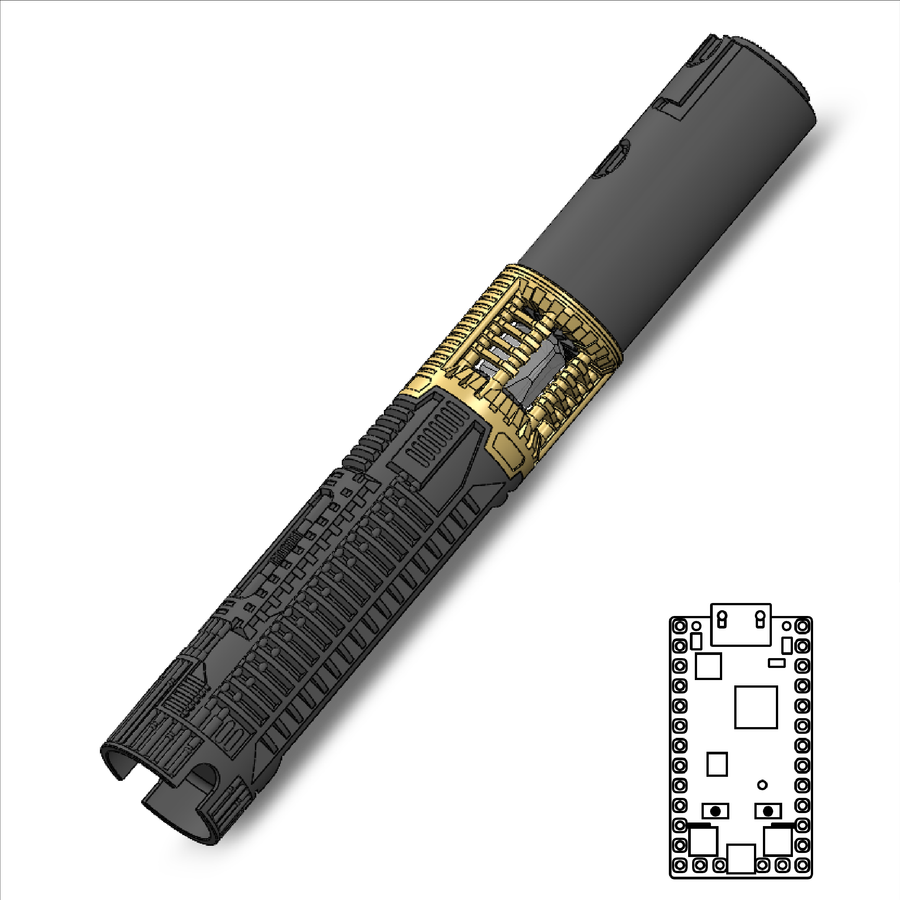
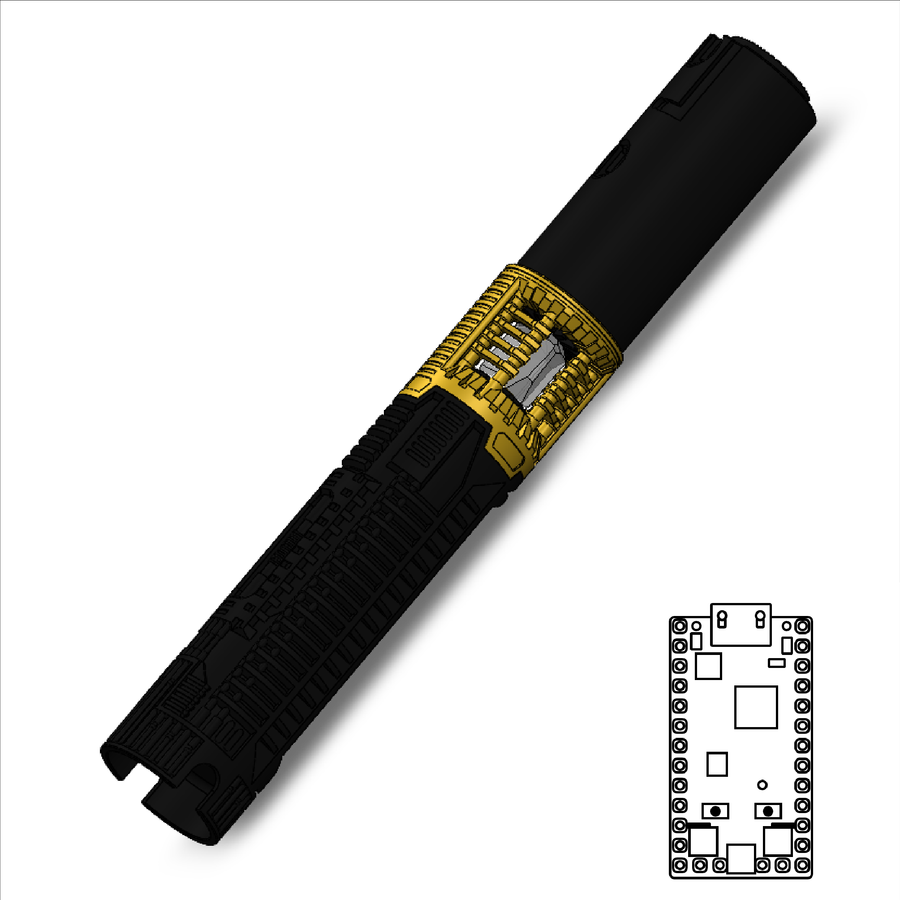
The ECO-CC builds upon the foundation of the standard ECO by introducing a crystal chamber (CC). This chamber is also 3D printed in PLA and houses a resin or 3D-printed crystal illuminated by a dedicated LED, such as an Adafruit NeoPixel RGB 5050 or a 5mm Nano NeoPixel. This tier provides a visually appealing "chassis reveal" while maintaining an accessible installation process.
ECO Cast
An intermediate option available on select hilts, the ECO Cast tier is identical to the ECO-CC in terms of electronic components. However, the critical distinction lies in the material of the crystal chamber itself. Instead of being 3D printed in PLA, the chamber is cast in a brass alloy with a brushed surface finish, providing a genuine metal aesthetic and increased structural integrity.
The Advanced ECO-Max Tiers
The ECO-Max tiers introduce significant kinetic and visual upgrades, transforming the chassis from a static housing into an interactive display piece.
ECO-Max
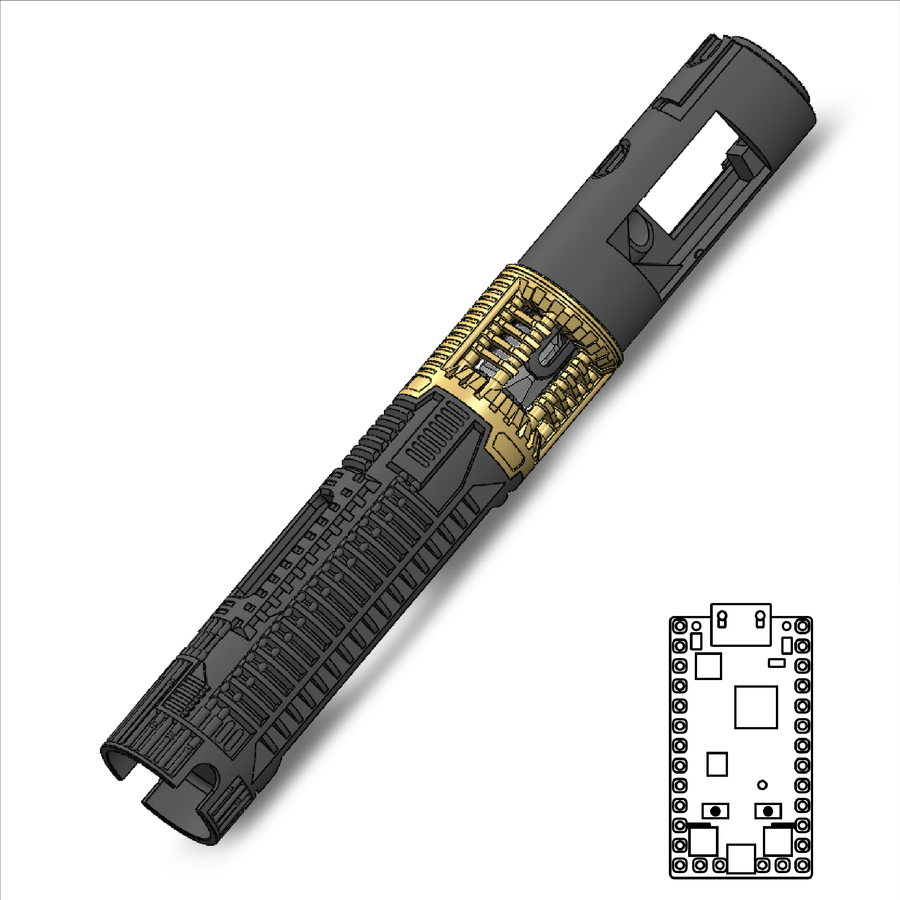
The ECO-Max tier represents a substantial leap in complexity. While still utilizing a 3D-printed PLA structure, it incorporates advanced electronic features that elevate the chassis reveal. Standard additions include an OLED display module (typically a 128x32 screen), a Bluetooth module for wireless configuration, accent LED strips (such as 3.5mm 2020 segments), and NeoPixel accent rings. The defining feature of the ECO-Max is the inclusion of a micro motor (often 47RPM), which physically spins the crystal within the chamber, creating a dynamic visual effect.
ECO-Max Cast
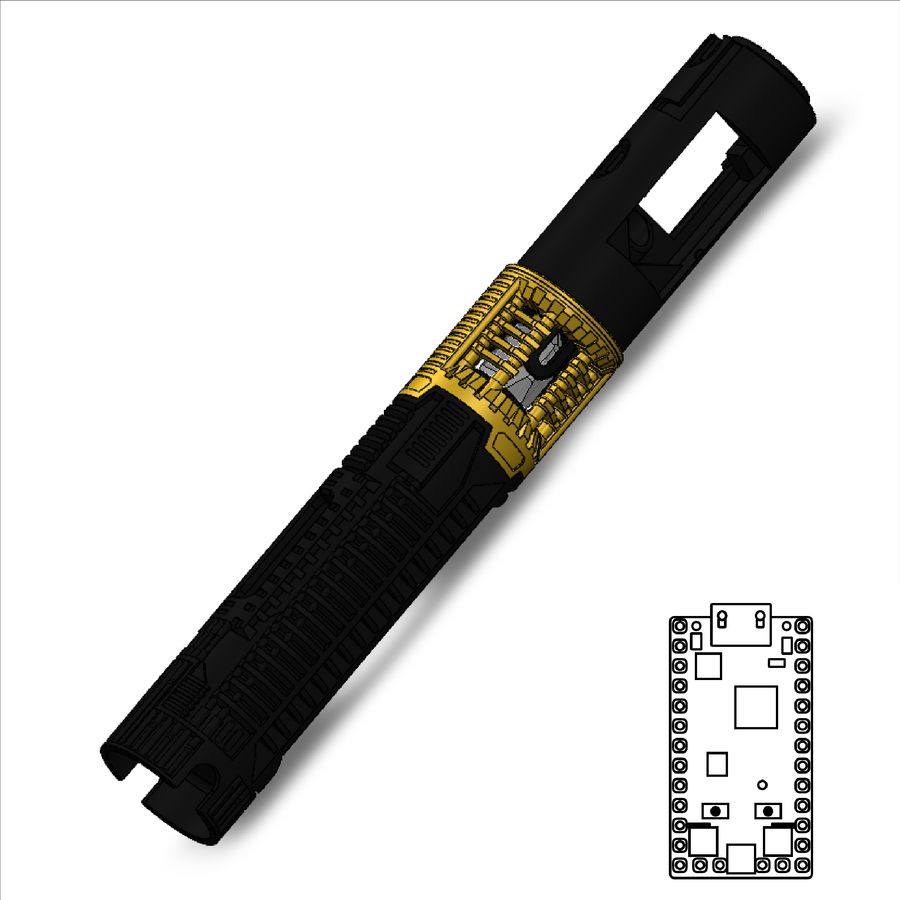
Mirroring the upgrade path of the ECO-CC, the ECO-Max Cast tier takes the advanced electronics of the ECO-Max and pairs them with a premium cast brass alloy crystal chamber. This combination offers the kinetic spinning crystal and OLED display alongside the authentic weight and finish of real metal.
The Premium and Master Tiers
At the upper echelon of chassis design, the focus shifts toward extensive metal construction, premium upgraded components, and intricate assembly processes intended for serious collectors.
ELITE
The ELITE tier is a premium offering that significantly upgrades the internal components and construction methods. While it may share some electronic features with the ECO-Max (such as OLED screens and spinning motors), the execution is markedly different. ELITE chassis often feature upgraded, higher-capacity batteries (e.g., 3120mAh), larger tactile switches, and premium hilt-side PCBs with short pins.
Furthermore, the ELITE tier introduces extensive use of neodymium magnets for securing chassis panels and components, moving away from simple friction fits. On certain models, such as the Graflex ELITE, the design incorporates unique aesthetic choices like Edison bulbs. The production time for an ELITE chassis is notably longer, often requiring 20 to 30 business days.
Metal Master
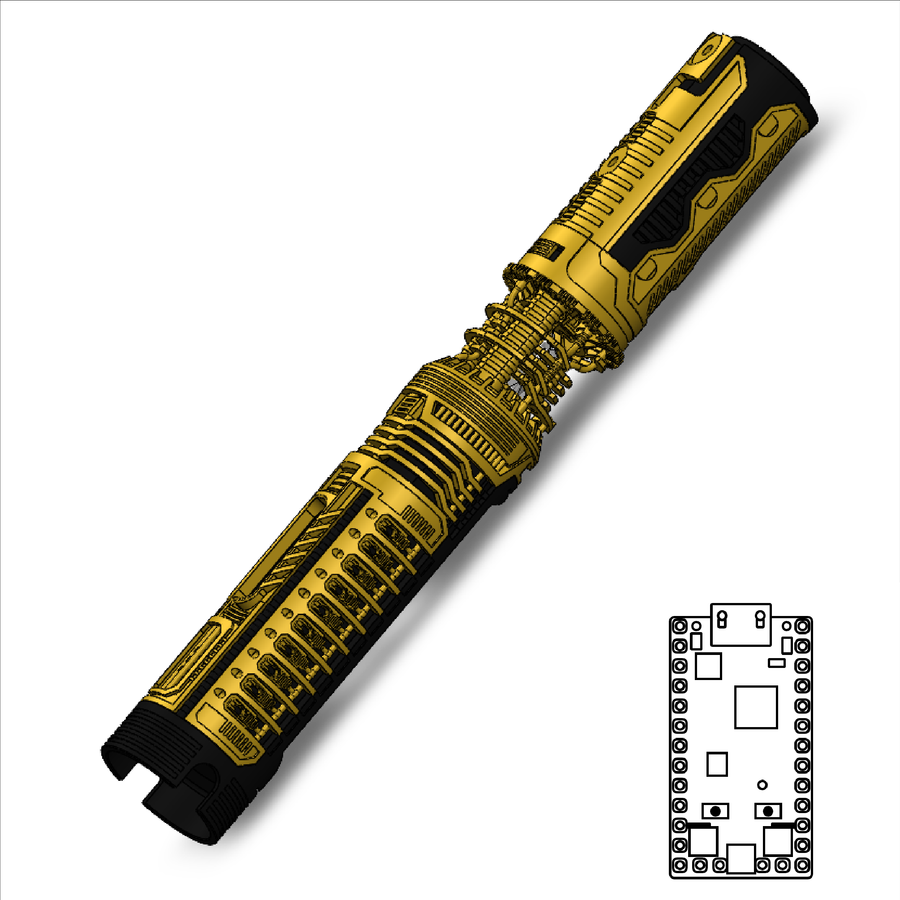
While the ELITE tier is highly advanced, it is not always the absolute top tier. On complex hilts like the Erasmios or Graflex, the Metal Master tier represents the pinnacle of chassis engineering within this ecosystem. These masterpieces utilize extensive metal components, including aluminum tubes, nickel-silver rods, and brass structural elements.
The electronic complexity is also maximized. A Metal Master chassis may feature dual micro motors operating at different speeds (e.g., 47RPM and 6400RPM), multiple pixel rings, dozens of neodymium magnets (sometimes nearly 30 in a single build), and even dual battery setups on larger hilts. Due to their extreme complexity, these tiers can require 40 to 60 business days for production.
References
- TheExiledJedi: Chassis Types — The Anatomy of the Hilt
- Reddit r/lightsabers: Lightsaber history! What was it like before smooth-swing was a thing?
- Reddit r/lightsabers: The lightsaber community through the years
- GOTH-3Designs: About Us
- Shapeways: 3D Printing Materials Spotlight: Nylon 12
- Reddit r/lightsabers: Anybody know what material is best for 3D printing saber chassis?
- GOTH-3Designs Frequently Asked Questions
- The Saber Armory: Chapter 16 Chassis DIY Kit
- The Saber Armory: Graflex Saber Kit Chassis DIY Kit
- The Saber Armory: ERASMIOS Chassis DIY Kit