An Attempt At A Lightsaber Glossary
(a work in progress)
Clear, unfiltered explanations of terminology used by builders, installers, and collectors—cutting through the gatekeeping and marketing noise.
Last updated: 12 Apr 2026
A Collector's Chronicle: An Attempt At A Definitive Lightsaber Glossary
(a work in progress)
High-end lightsaber collection & unfiltered truths from the front lines of a market that doesn't want you to ask questions.
Welcome to the definitive glossary of high-end lightsaber collecting (but please note it is still very much a work in progress). When you step into this hobby, you are immediately bombarded with an overwhelming amount of jargon, acronyms, and technical specifications. Sellers will throw terms at you to justify exorbitant prices, while the community gatekeeps behind a wall of assumed knowledge.
This guide is designed to cut through the noise. It provides clear, unfiltered explanations of the terminology used by builders, installers, and collectors. Whether you are navigating your first purchase or trying to decipher the specifications of a bespoke commission, this glossary will serve as your essential reference.
Anatomy of a Lightsaber Hilt
The hilt is the physical handle of the lightsaber. Understanding its components is the first step in identifying quality craftsmanship versus cheap mass production.
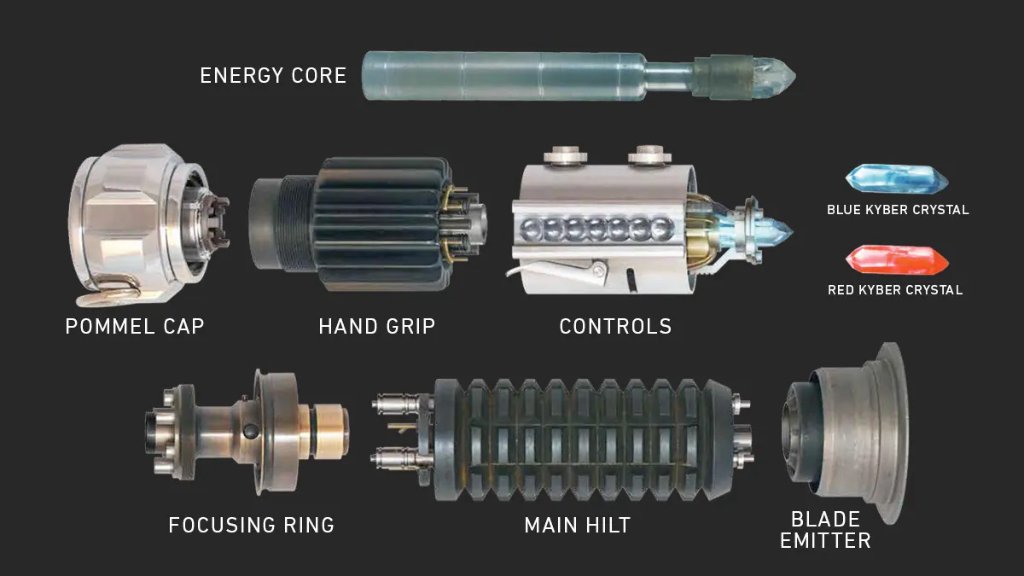

Hilt The main body or handle of the lightsaber. In the high-end market, these are typically machined from aircraft-grade aluminum, brass, or steel. An "empty hilt" refers to the metal body sold without any internal electronics, which is the starting point for most custom installations.
Emitter The topmost section of the hilt where the blade is inserted and secured. Emitters often feature intricate designs, such as windows (cutouts that let light shine through) or claws. A well-machined emitter is crucial for blade stability during use.
Pommel The bottom cap of the hilt. Beyond aesthetics, the pommel serves two critical functions: it balances the weight of the saber, and it is almost always vented (featuring holes or slots) to allow sound from the internal speaker to escape clearly.
Shroud A decorative outer sleeve or cover that slides over sections of the main hilt body. Shrouds add depth, texture, and visual complexity to the design, often secured with small screws or integrated into the machining.
Choke Point A deliberately narrowed section of the hilt designed to provide an ergonomic, secure grip for the wielder's hand. This is especially important for those who practice spinning or combat.
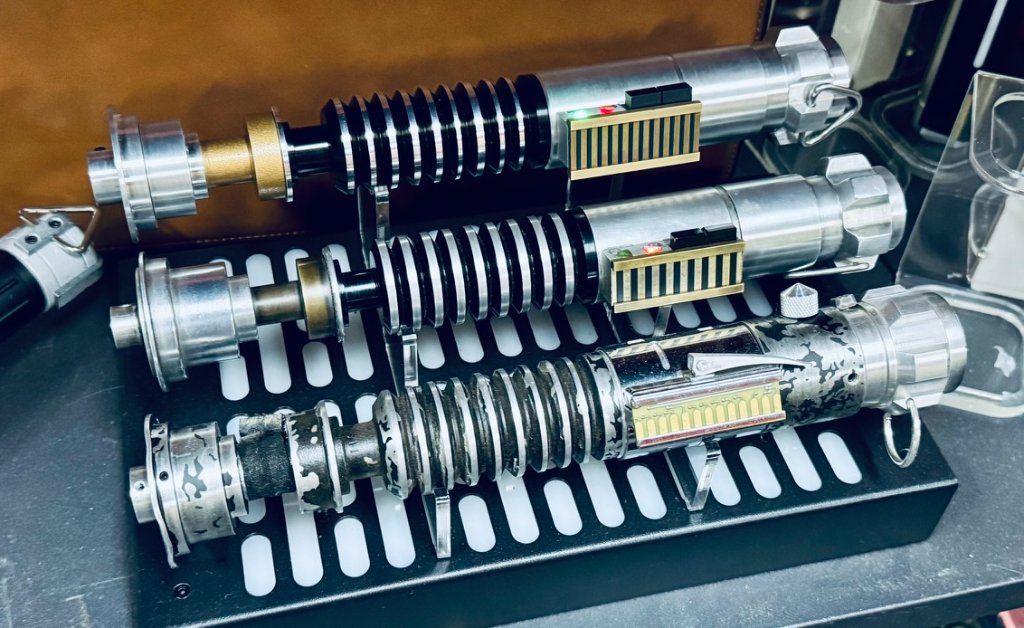
Grenade Section A deeply ribbed or textured grip section, named for its resemblance to vintage rifle grenades. This is a hallmark of the classic Obi-Wan Kenobi and Luke Skywalker hilt designs.
Coupler A threaded or quick-release cylindrical component used to join two separate lightsaber hilts together at the pommels, creating a double-bladed lightsaber or "staff".
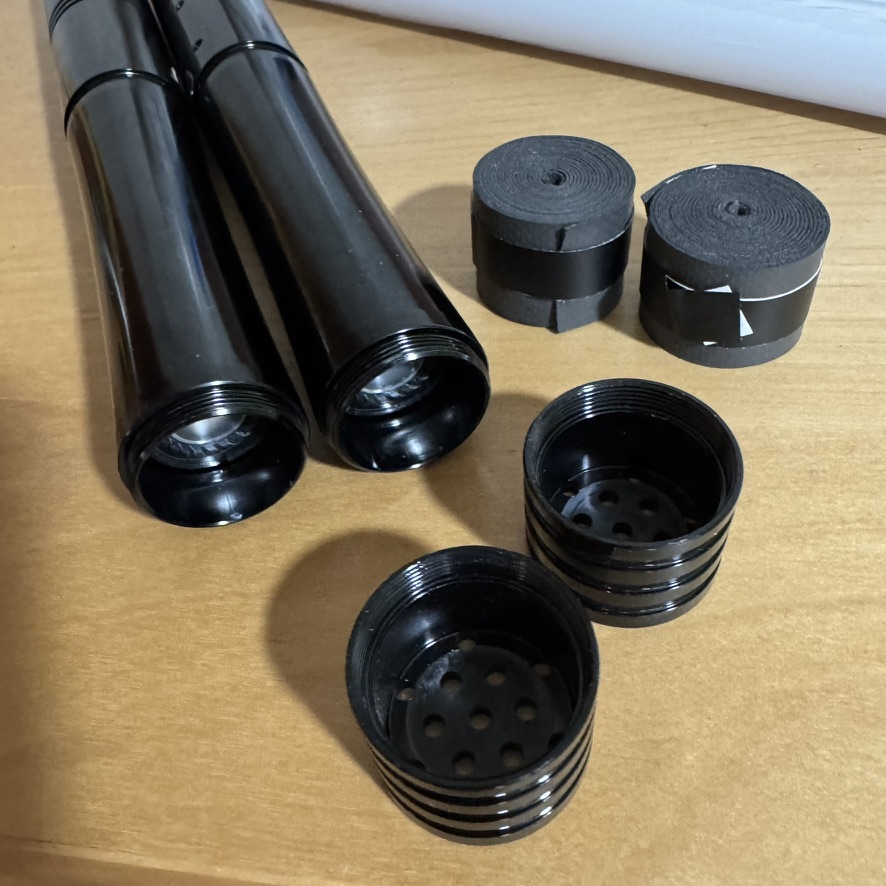
Blade Retention Screw A small grub screw (usually requiring an Allen key) located on the emitter. It is tightened against the inserted blade to hold it securely in place. High-end hilts often use multiple retention screws for added security.
Thin Neck A specific hilt design featuring a very narrow, elongated section just below the emitter. Famous examples include the Obi-Wan Kenobi and Luke Skywalker Return of the Jedi sabers. These require specialized, often fragile, internal engineering to allow light or wiring to pass through the narrow gap.
Blades and Illumination Technology
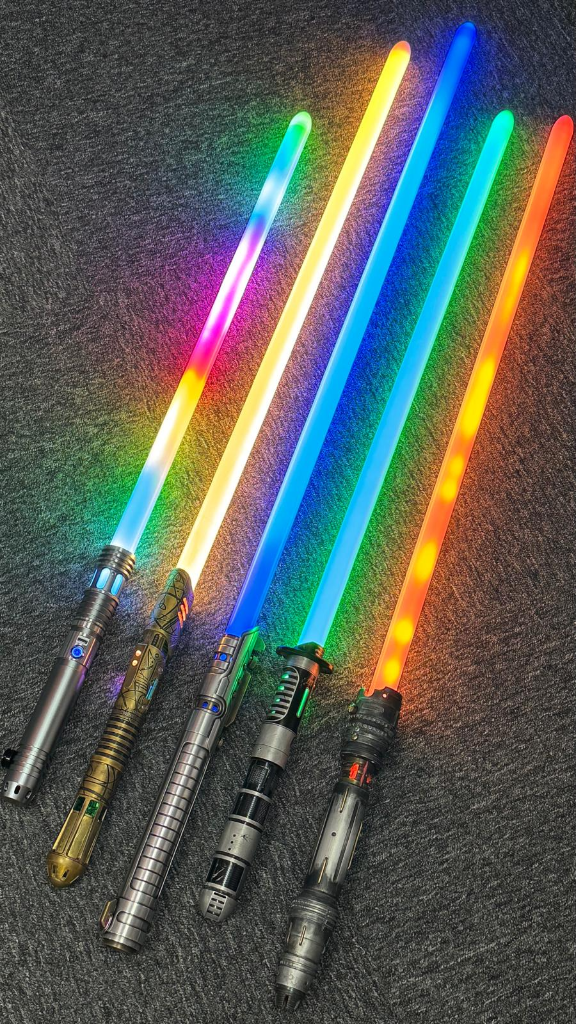
The technology used to illuminate the blade is the most significant factor in a lightsaber's cost, visual impact, and durability. The market has evolved significantly beyond simple glowing tubes.
Illumination Methods
Neopixel (or Pixel Blade) The gold standard for modern high-end lightsabers. Instead of a light source in the hilt, a Neopixel blade contains strips of individually addressable LEDs (usually WS2812B) running its entire length. This allows for incredibly bright, even illumination and advanced visual effects like scrolling ignitions, localized blaster blocks, and multi-colored blade styles.
In-Hilt LED (Base-Lit) The older, more durable, but less visually impressive illumination method. A powerful LED module (often a Tri-Cree) sits inside the emitter and shines a beam of light up a hollow, reflective polycarbonate tube. While they lack advanced effects, they are significantly cheaper and the blades are inexpensive to replace if broken during heavy combat.
Neopixel Blade Construction Types
Flexible LED Strip Blade The most common Neopixel construction. It uses two flexible LED strips placed back-to-back inside a foam diffusion tube, which is then inserted into the polycarbonate blade. It provides excellent brightness but can occasionally suffer from dark spots if the strips shift.
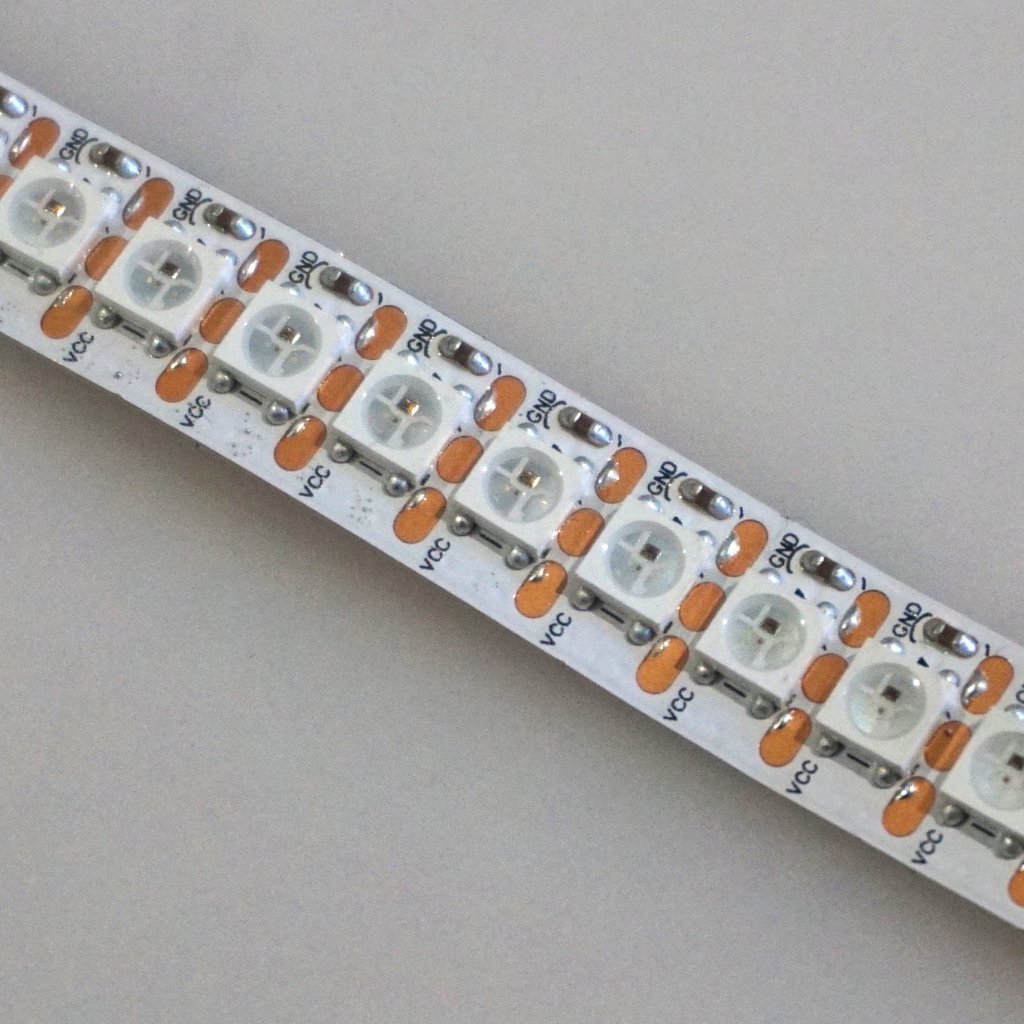
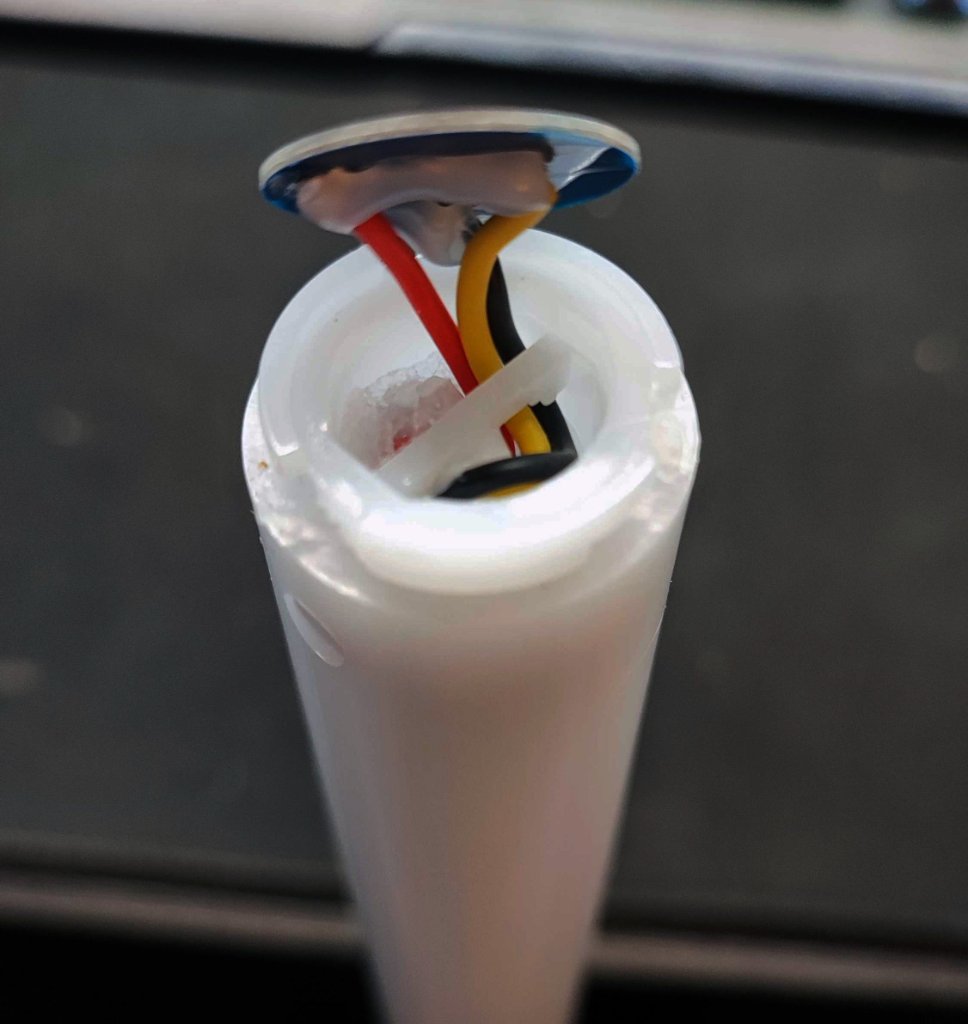
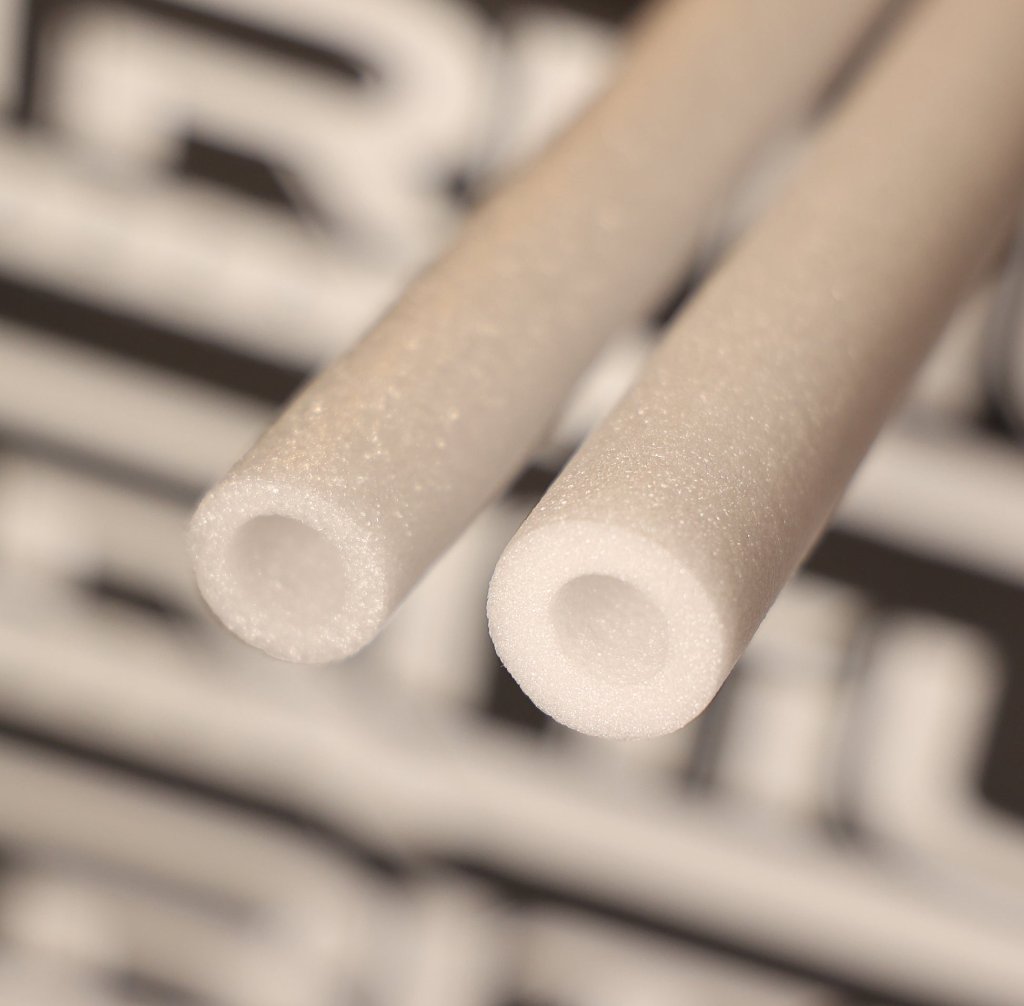
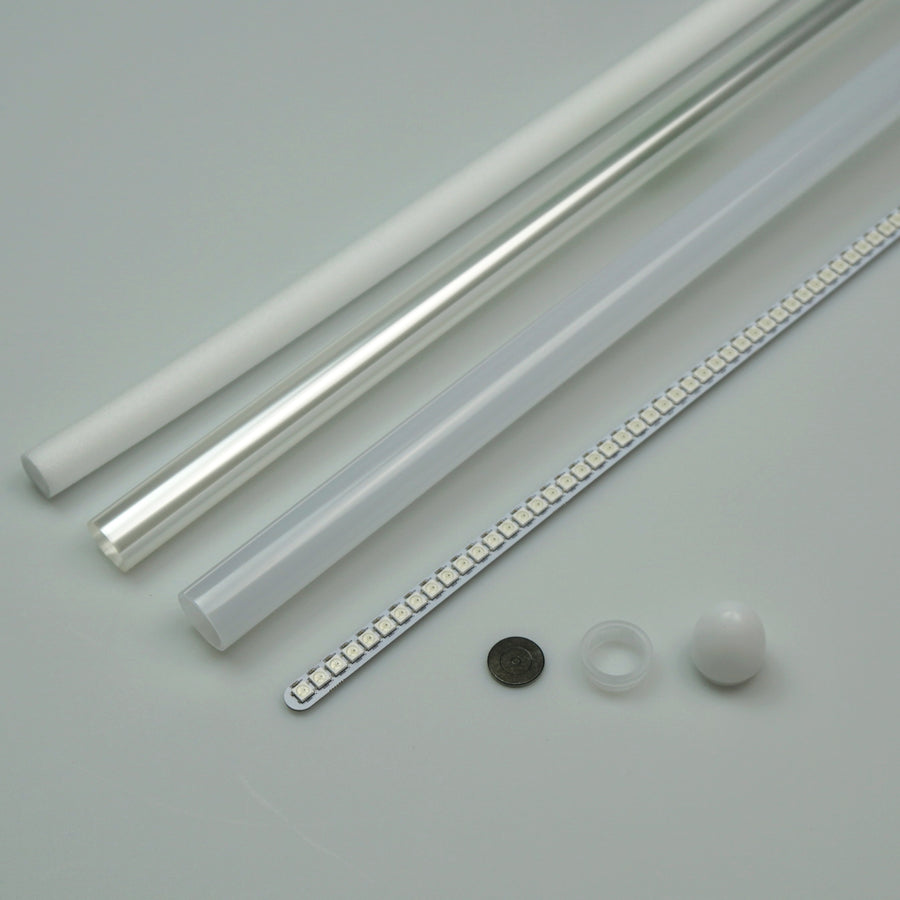
Pixel Stick (Rigid PCB) Blade A premium alternative to flexible strips. Products like the KR Sabers Pixel Stick use a rigid fiberglass PCB with LEDs mounted on both sides. This ensures perfect alignment, eliminates the "wobble" sometimes found in flexible strip blades, and often features a higher LED density for smoother effects.
Blade Grades and Dimensions
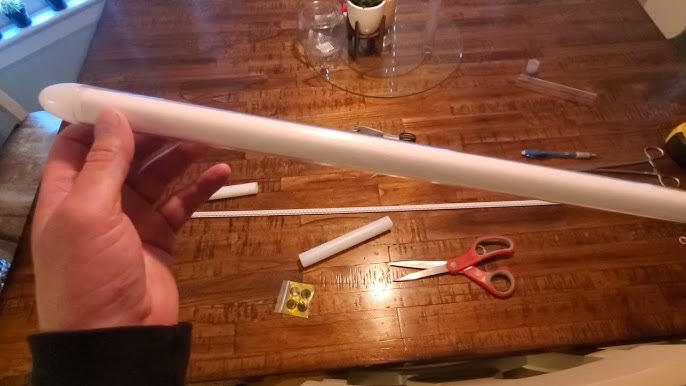
Polycarbonate Tube The standard material used for the physical blade exterior. It is a highly durable, shatter-resistant plastic. Inside the tube, there is usually a layer of diffusion film and sometimes a foam tube to ensure the light spreads evenly without showing individual LED dots.
Heavy-Grade vs. Mid-Grade Blades Blades are classified by their wall thickness. Heavy-grade blades have thick walls (typically 3mm) and are designed to withstand full-contact, heavy dueling. Mid-grade blades have thinner walls (around 2mm), making them lighter, better balanced, and significantly brighter, but they are intended for display, light spinning, or light sparring only.
1-inch vs. 7/8-inch Diameter The outer diameter (OD) of the blade. 1-inch is the industry standard for most hilts. The 7/8-inch (Slimline) blade is narrower and is required for specific hilt designs, most notably thin-neck sabers like Obi-Wan's or Luke's, where a 1-inch blade would look disproportionately thick.
Specialty Blades and Components
Day Blade A specialized polycarbonate blade that is tinted a specific color (e.g., red, blue, green) rather than the standard translucent white. The benefit is that the blade looks like a colored lightsaber even when powered off or used in bright daylight. The drawback is that it limits the color-changing capabilities of a Neopixel setup, as a blue LED shining through a red day blade will look muddy.
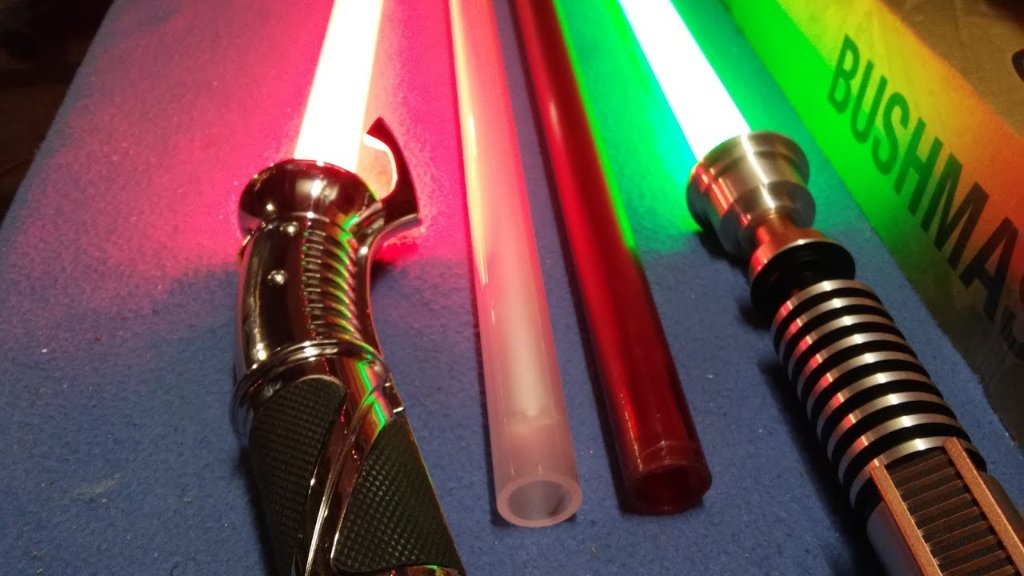
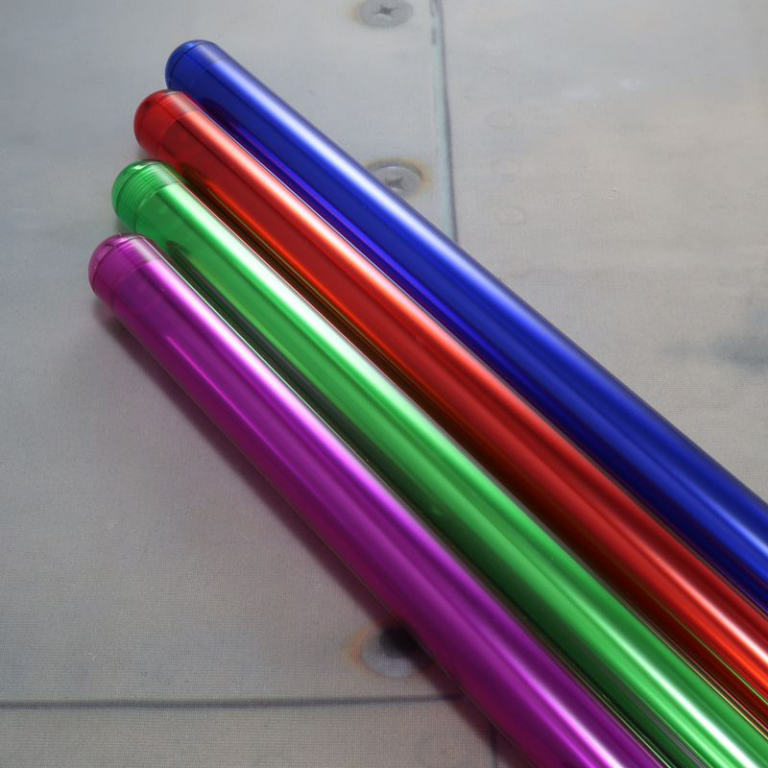
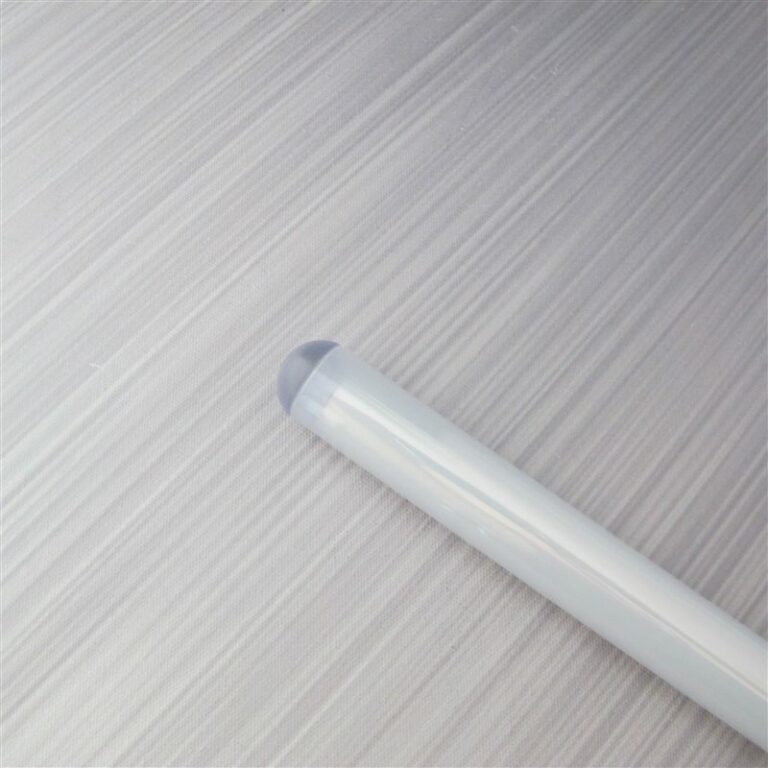
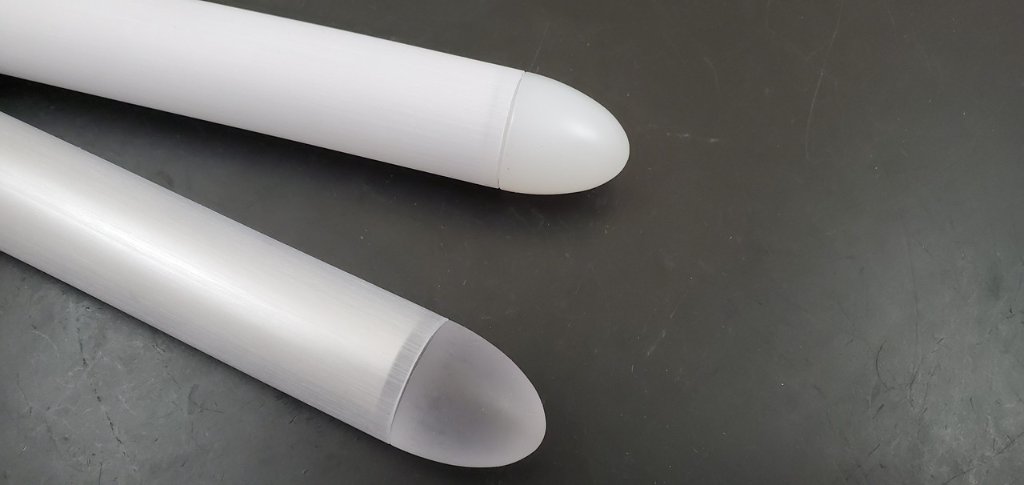
Blade Tip Types The cap at the end of the blade. Standard tips are rounded (bullet-shaped). Premium blades often feature "parabolic" tips, which are hollowed out and mirrored internally to ensure the tip illuminates just as brightly as the rest of the blade, eliminating the dark spot common on cheaper blades.
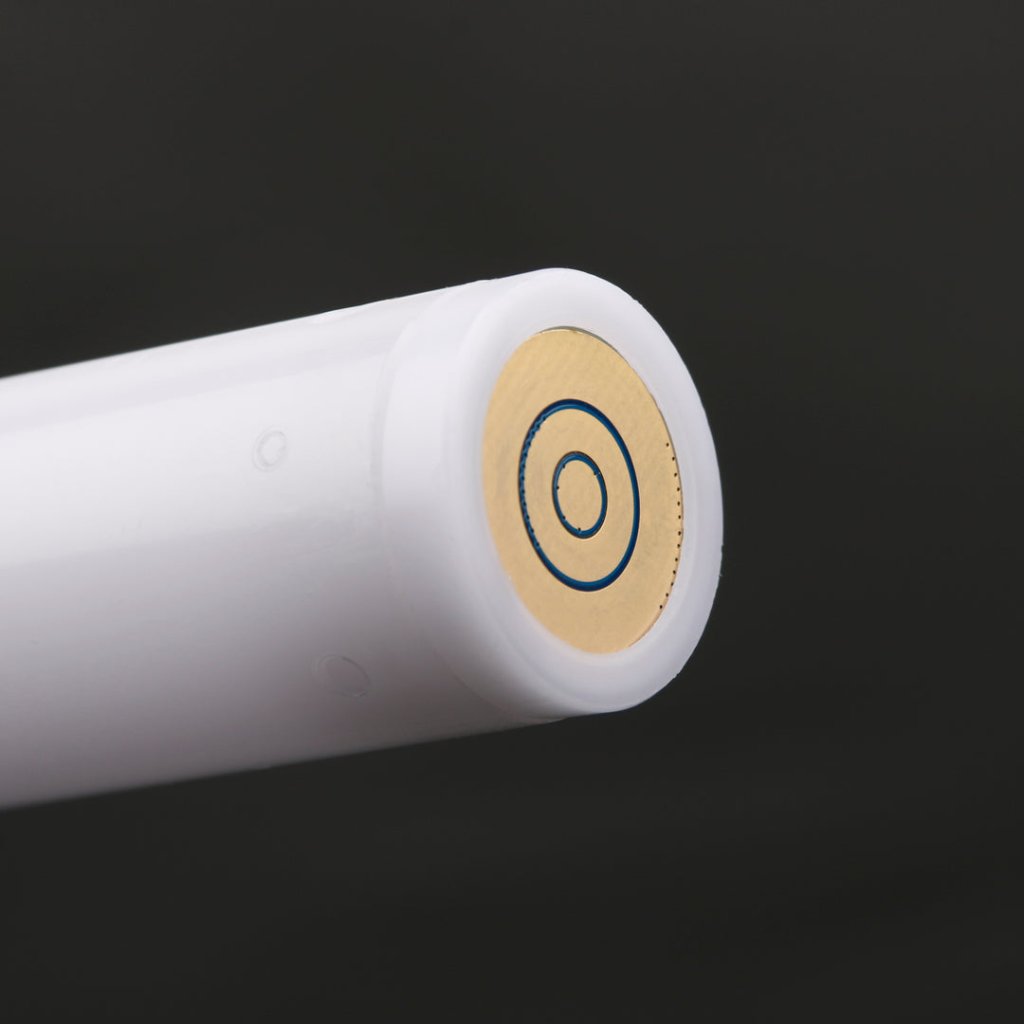
Blade Plug A short, decorative plug inserted into the emitter when the main blade is removed. It prevents dust from entering the hilt, protects the delicate Pogo pins in a Neopixel setup, and provides a finished, "in-universe" look for display.
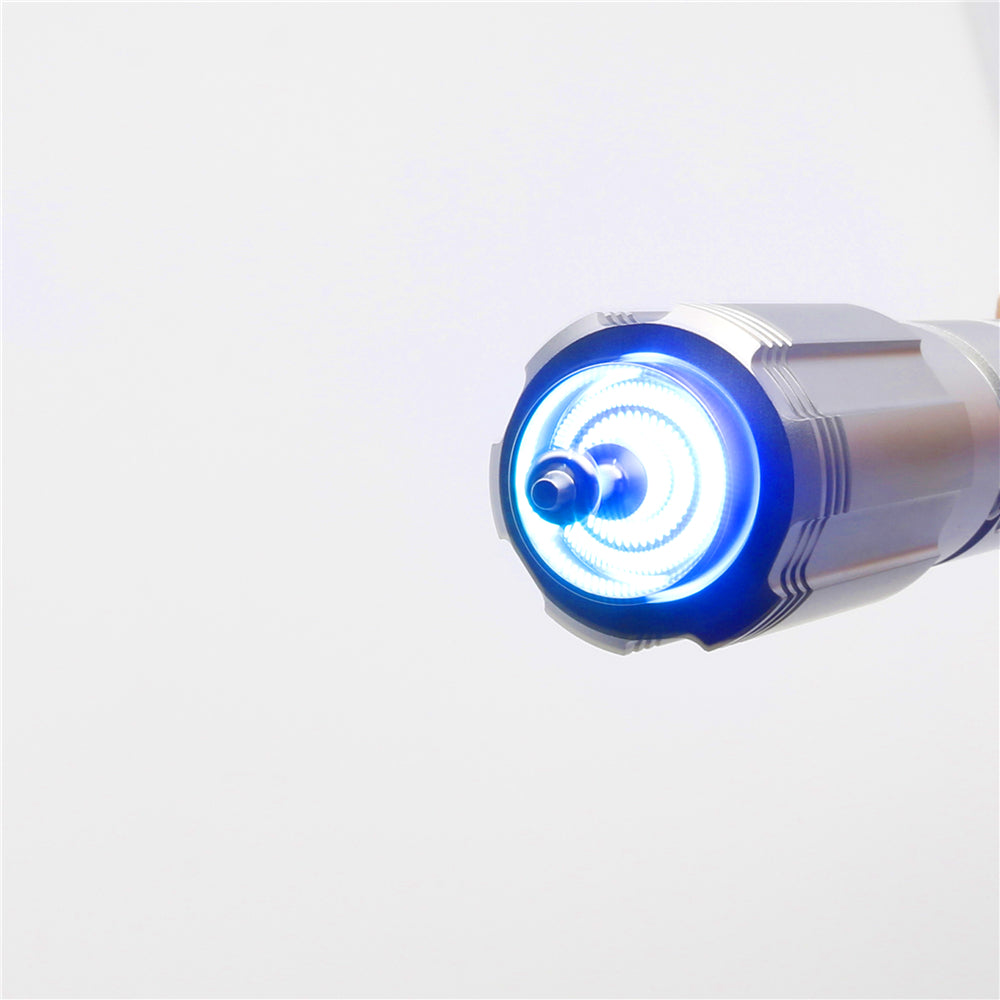
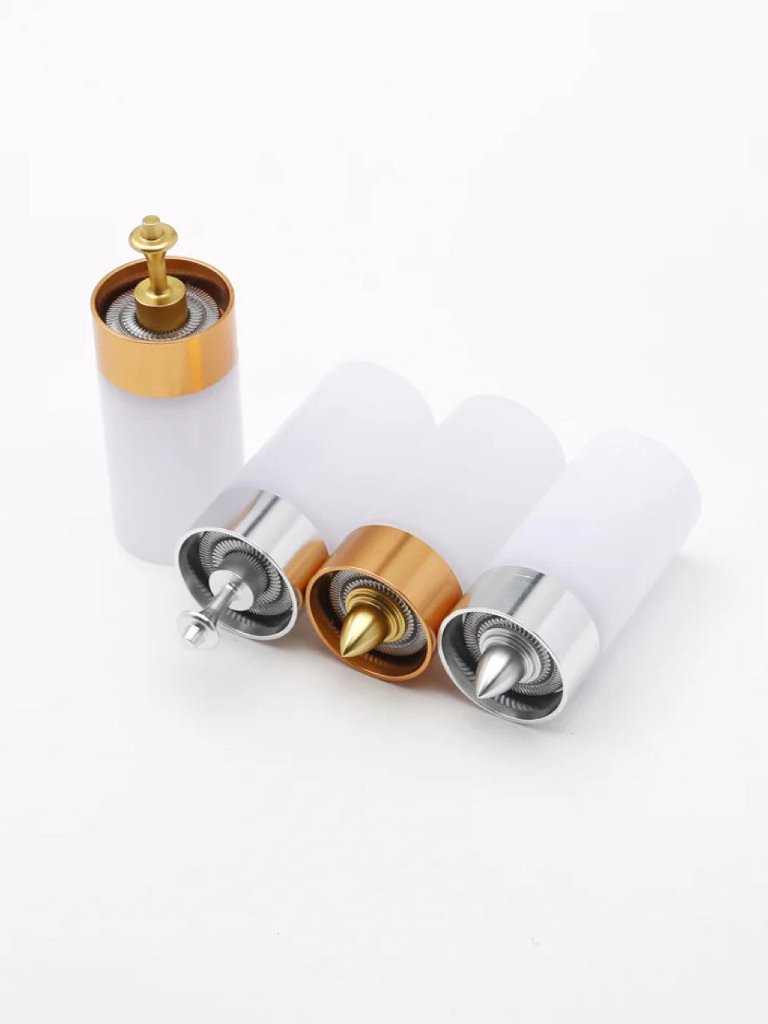
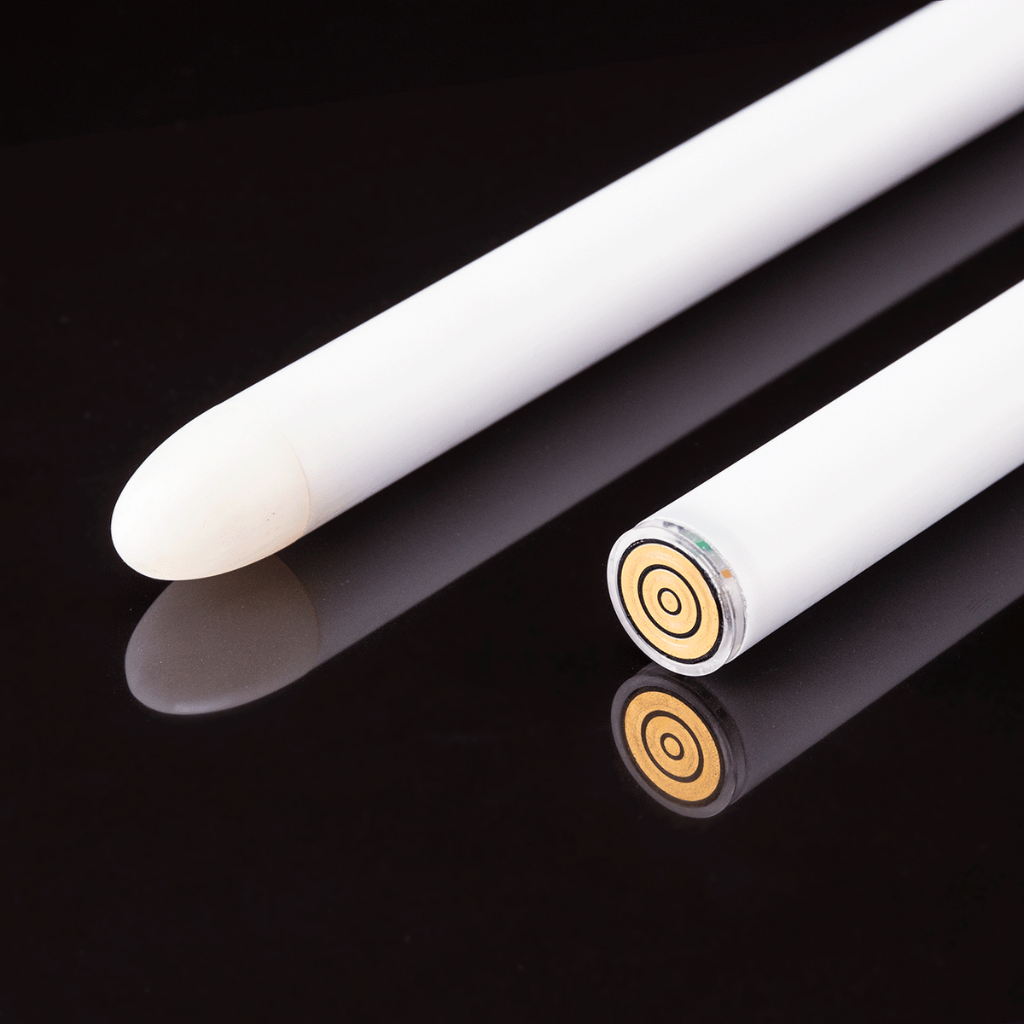
Pogo Pins Spring-loaded electrical contact pins located inside the emitter of a Neopixel hilt. They press against the circular PCB (Printed Circuit Board) at the bottom of a Neopixel blade to transmit power and data. These are delicate and must be kept clean.
Chassis Systems and Internals
The "core" or "install" of a lightsaber is where the true craftsmanship lies. A beautiful hilt can be ruined by a sloppy, hot-glued internal installation. The chassis is the foundation of a quality build.
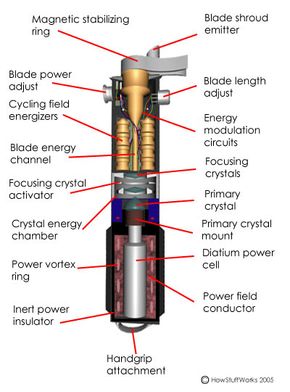
Understanding the Chassis
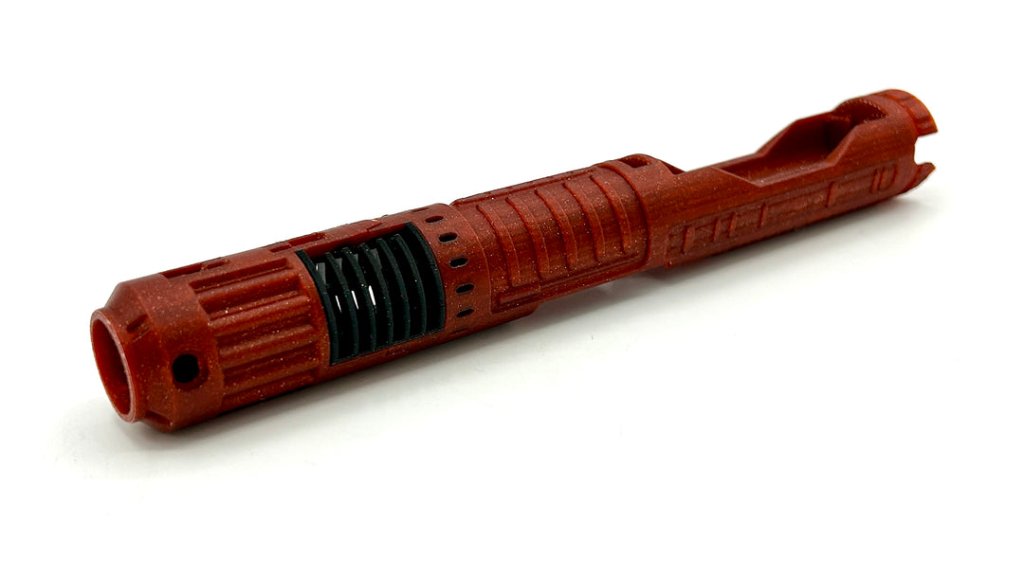
Chassis The internal framework that holds the battery, soundboard, speaker, and wiring securely inside the hilt. In high-end sabers, these are precision 3D-printed (FDM or Resin) or CNC-machined to fit perfectly, preventing components from rattling and protecting delicate electronics during dueling.
Chassis Tiers and Designs
Standard / ECO Chassis A practical, budget-friendly 3D printed frame designed solely for function. It holds the components securely but lacks decorative elements. This is common in budget installs or sabers meant strictly for heavy dueling where the internals will never be displayed.
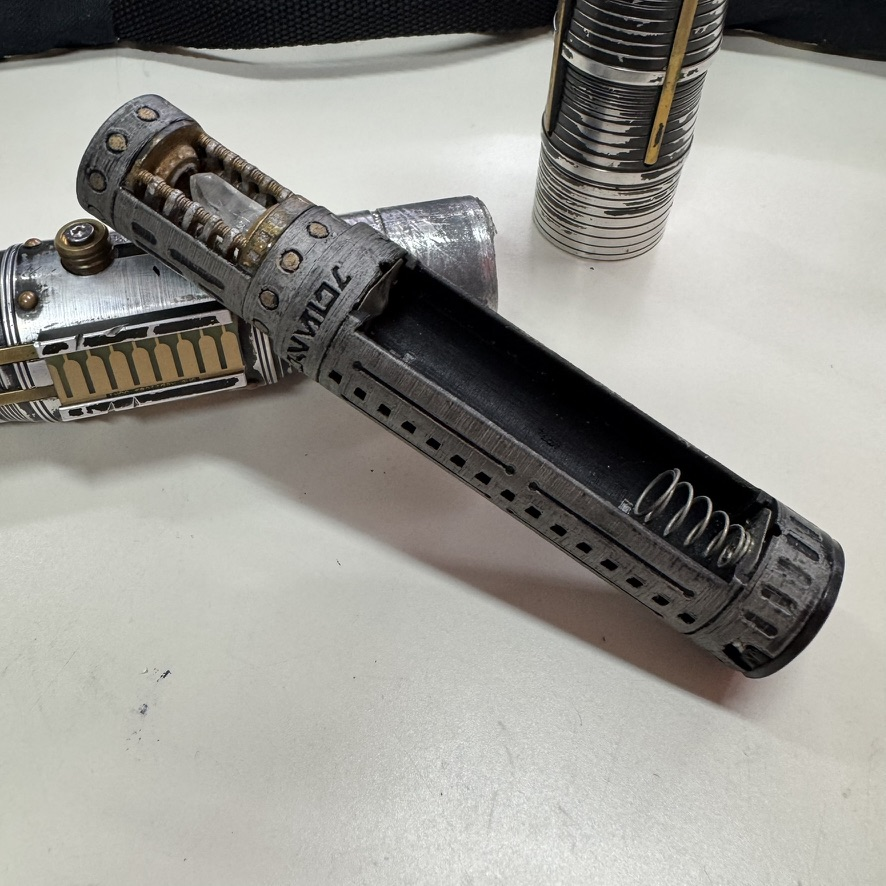
Removable Core System A highly practical design where all electronics (board, battery, speaker, and emitter pins) are mounted on a single cylindrical chassis unit that can slide completely out of the hilt. This allows for easy maintenance, battery swaps, or moving one expensive "core" between multiple empty hilts. Sabertrio's "Power Core" is a prime example of this modular approach.
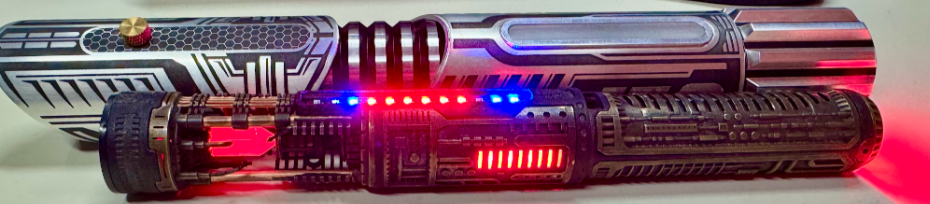
Master Chassis A premium tier of chassis design, popularized by designers like GOTH-3Designs. A Master Chassis turns the interior of the lightsaber into a work of art. They often feature intricate metal detailing (brass, copper, or gold plating), visible wiring paths, and a "Crystal Chamber Reveal".
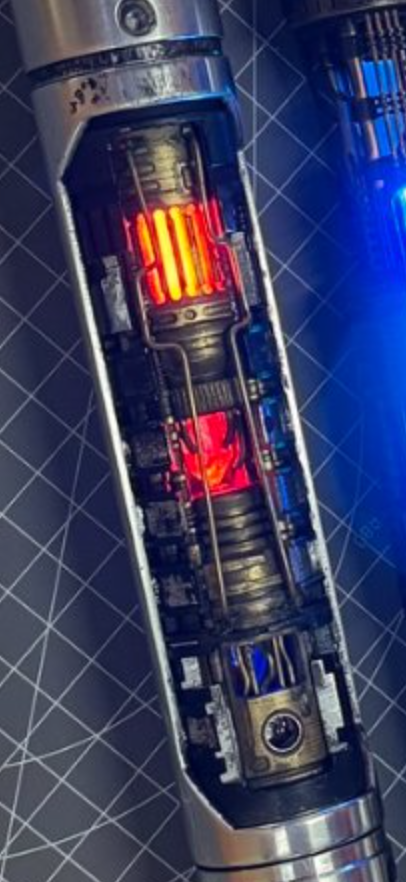
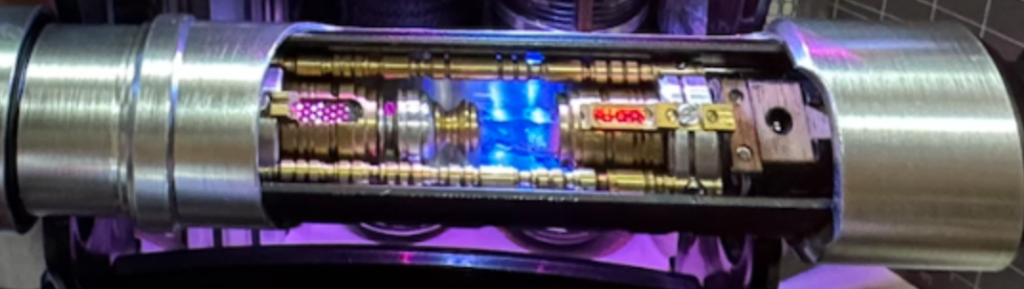
Grand Master Chassis The absolute pinnacle of chassis engineering. These are high-end collector pieces that can cost more than the hilt itself. A Grand Master chassis typically features extensive CNC-machined metal parts, multiple hatches or doors to view the internals, swappable real quartz crystals, and sometimes even motorized spinning crystal chambers.
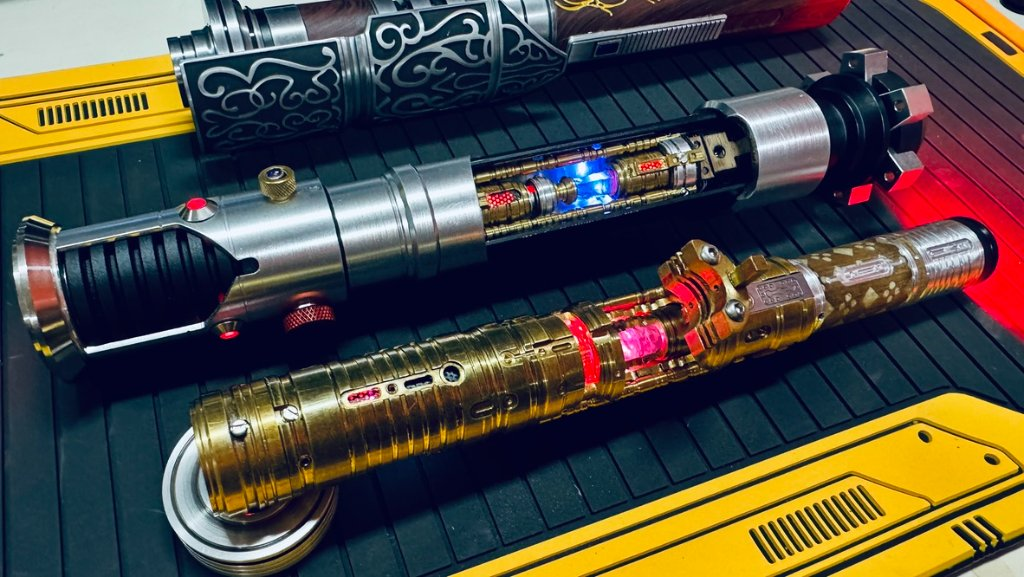
Crystal Chamber Reveal A specific design element within a premium chassis. It features a real or cast crystal (often quartz) illuminated by dedicated accent LEDs. The hilt is usually designed to unscrew or open up specifically to display this glowing chamber, mimicking the "kyber crystal" heart of the lightsaber.
Electronic Components
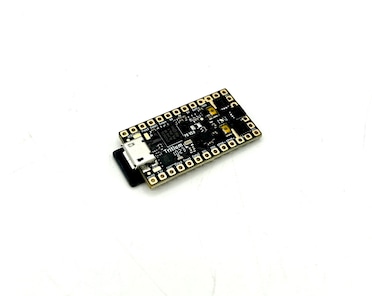
Soundboard The brain of the lightsaber. It processes motion data, triggers sounds, and controls the LED effects. The market is dominated by a few major boards:
- Proffieboard (Proffie): The enthusiast's choice. It is open-source, infinitely customizable, and capable of the most complex blade styles, but requires coding knowledge to program.
- Crystal Focus X (CFX): A premium, highly reliable board that is easier to configure than Proffie, offering excellent sound quality and robust features.
- Golden Harvest v3 (GHv3): A very user-friendly board that allows extensive customization directly through the saber's menu without needing a computer.
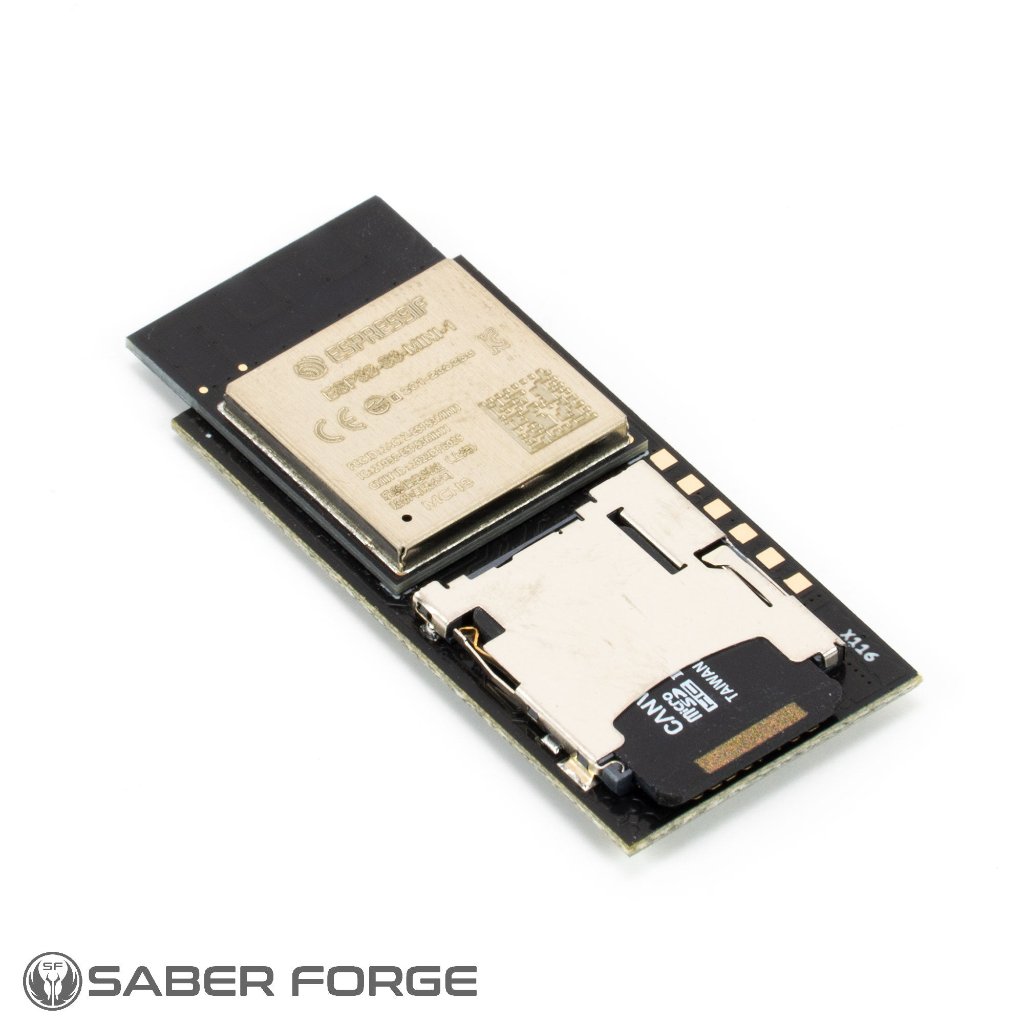
Smooth Swing A revolutionary audio algorithm now standard on all high-end boards. It uses highly sensitive gyroscopes to dynamically generate hum and swing sounds that perfectly match the speed and angle of your movements in real-time, eliminating the repetitive, canned swing sounds of older toys.
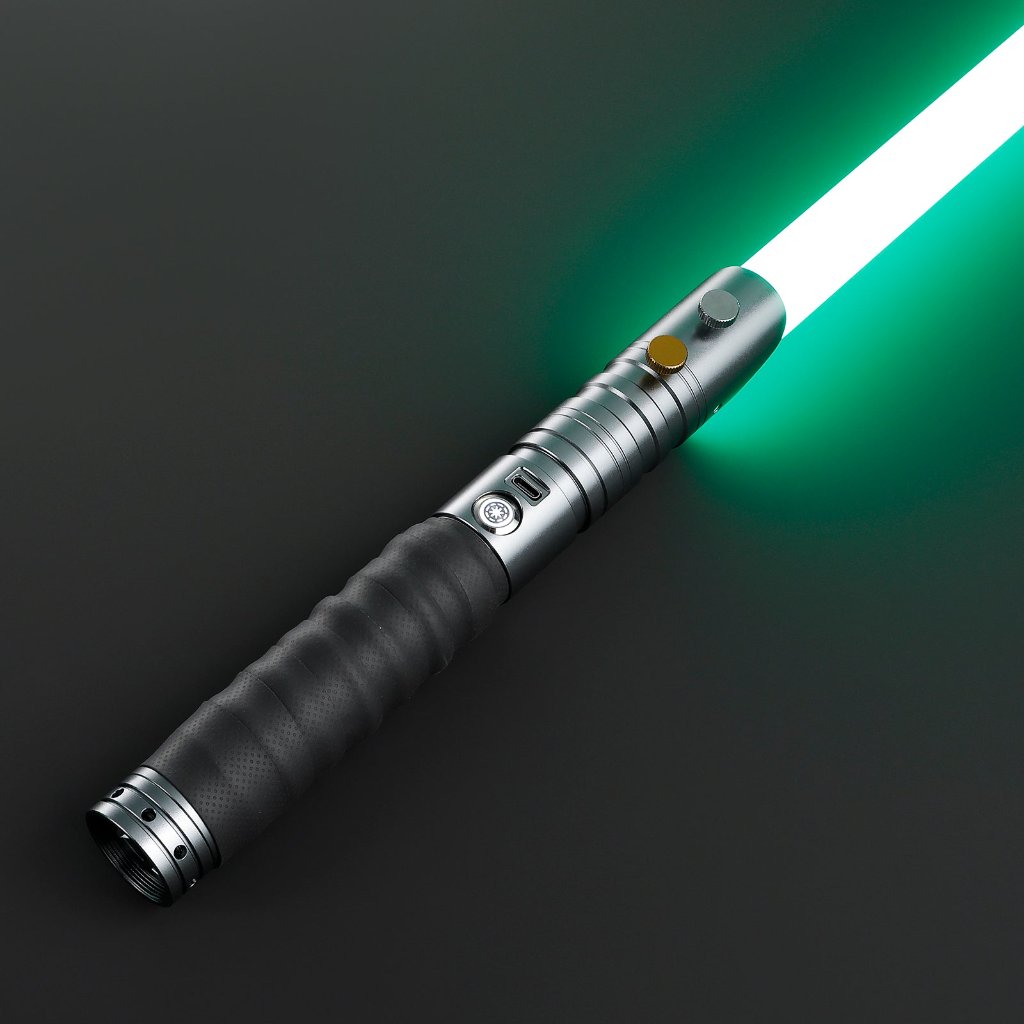
Sound Font A complete package of audio files loaded onto the soundboard's SD card. A font includes the hum, ignition, retraction, clashes, swings, and blaster deflection sounds, usually themed around a specific character or concept.
Blade Style The visual programming that dictates how the Neopixel LEDs behave. This includes the color, flicker rate, ignition speed, and special effects like "Flash on Clash" (the blade flashing white upon impact) or "Lockup" (a localized bright section simulating blades pressed together).
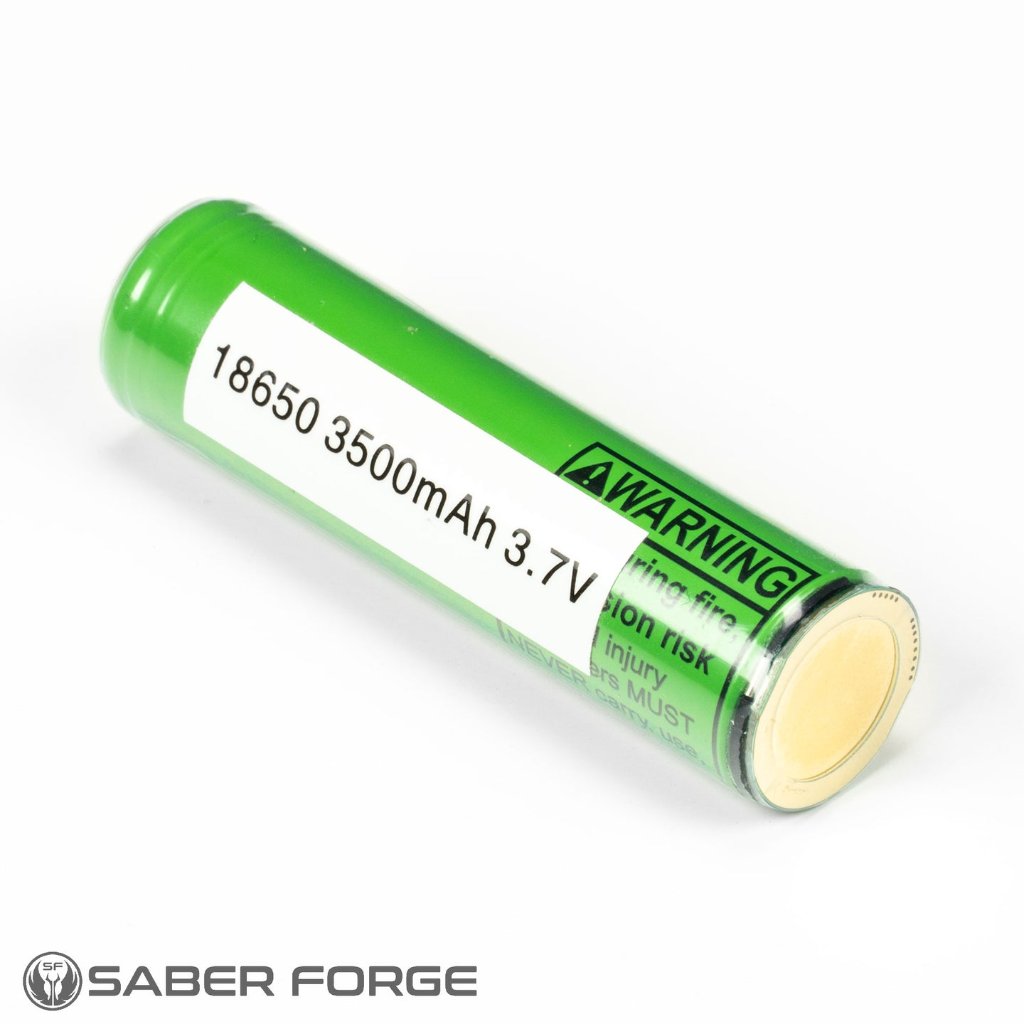
18650 Battery The standard power source for high-end lightsabers. It is a rechargeable, high-drain lithium-ion battery. Neopixel sabers draw massive amounts of current (often 10-15 amps), requiring high-quality, unprotected or specially protected cells.
Kill Key A small plastic or metal plug inserted into the recharge port. It physically breaks the circuit, cutting power from the battery to the soundboard to prevent battery drain during storage or display.
OLED Screen A small digital display integrated into the chassis or the exterior of the hilt. It provides a visual interface for checking battery life, selecting sound fonts, and navigating settings.
Collecting and Prop Terminology
The high-end market is deeply tied to the recreation of cinematic props, bringing its own set of specialized terms.
"The Bible" (The Complete Lightsaber Prop Guide) The definitive reference document for lightsaber prop collectors, authored by RPF (Replica Prop Forum) member SethS. Hosted on WannaWanga, this comprehensive PDF guidebook exhaustively documents the real-world "found parts" used to construct the original filming props. It is considered required reading for anyone pursuing screen-accurate replicas.
Hero Prop vs. Stunt Prop In filmmaking, a "Hero" prop is highly detailed, made of premium materials, and used for close-up shots. A "Stunt" prop is simplified, often cast in rubber or resin, and used for wide shots or action sequences. In collecting, a "Hero" saber implies the highest level of screen accuracy and detail.
Screen Accurate A replica that strives to match the original filming prop down to the smallest detail, including asymmetrical flaws, specific screw types, and exact dimensions.
Graflex The holy grail of lightsaber origins. The original lightsabers used by Luke Skywalker and Anakin Skywalker in A New Hope and The Empire Strikes Back were constructed from vintage 1940s Graflex 3-Cell camera flash tubes. Today, high-end replicas are built from exact machined copies of these flash tubes.
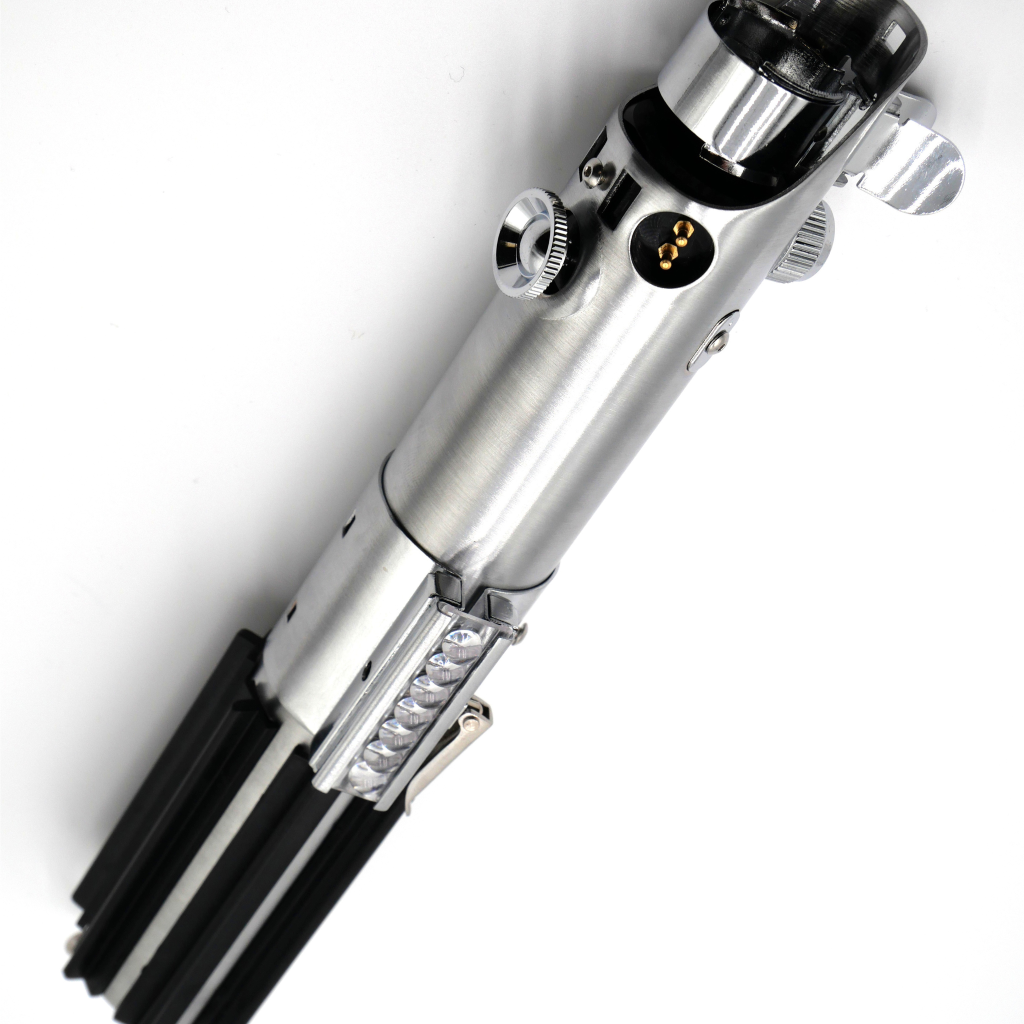
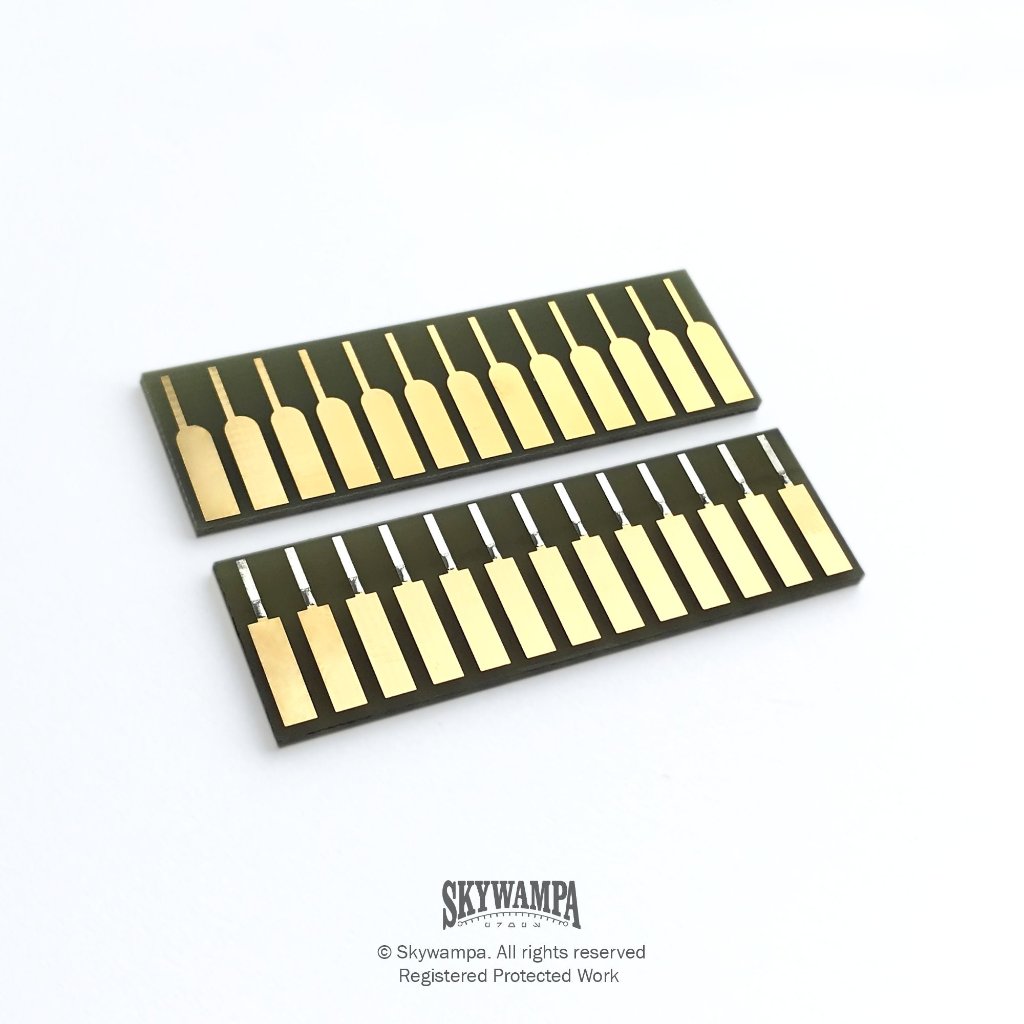
Clamp Card A rectangular circuit board piece that slides into the activation clamp of a Graflex or similar hilt. Originally a salvaged calculator component, it serves as the visual activation switch on many iconic designs.
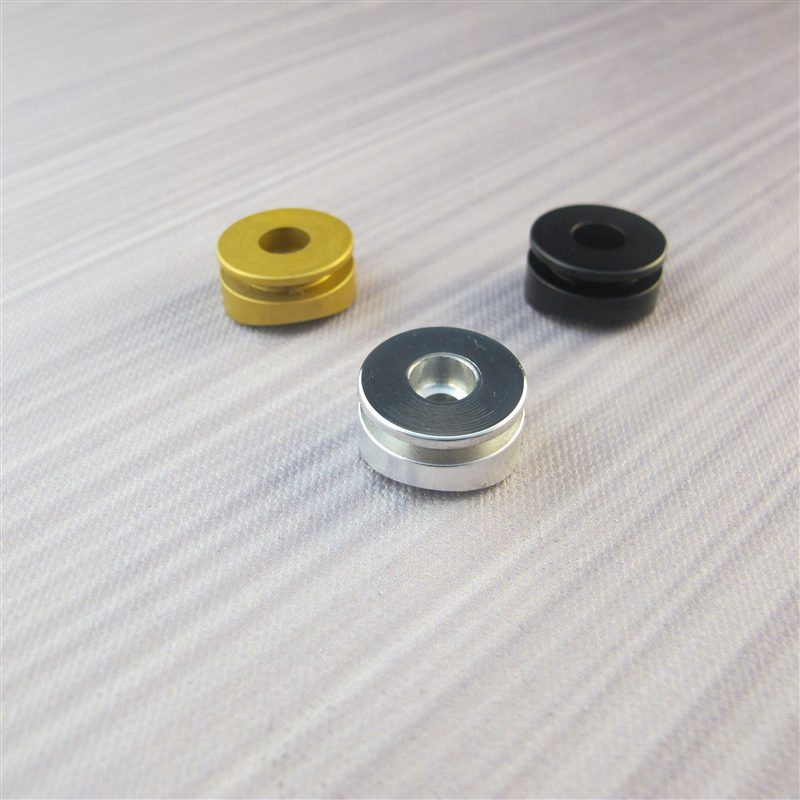
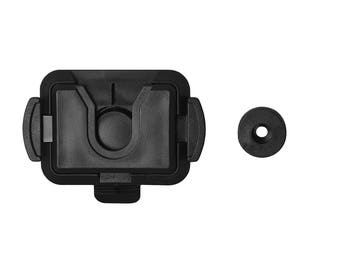
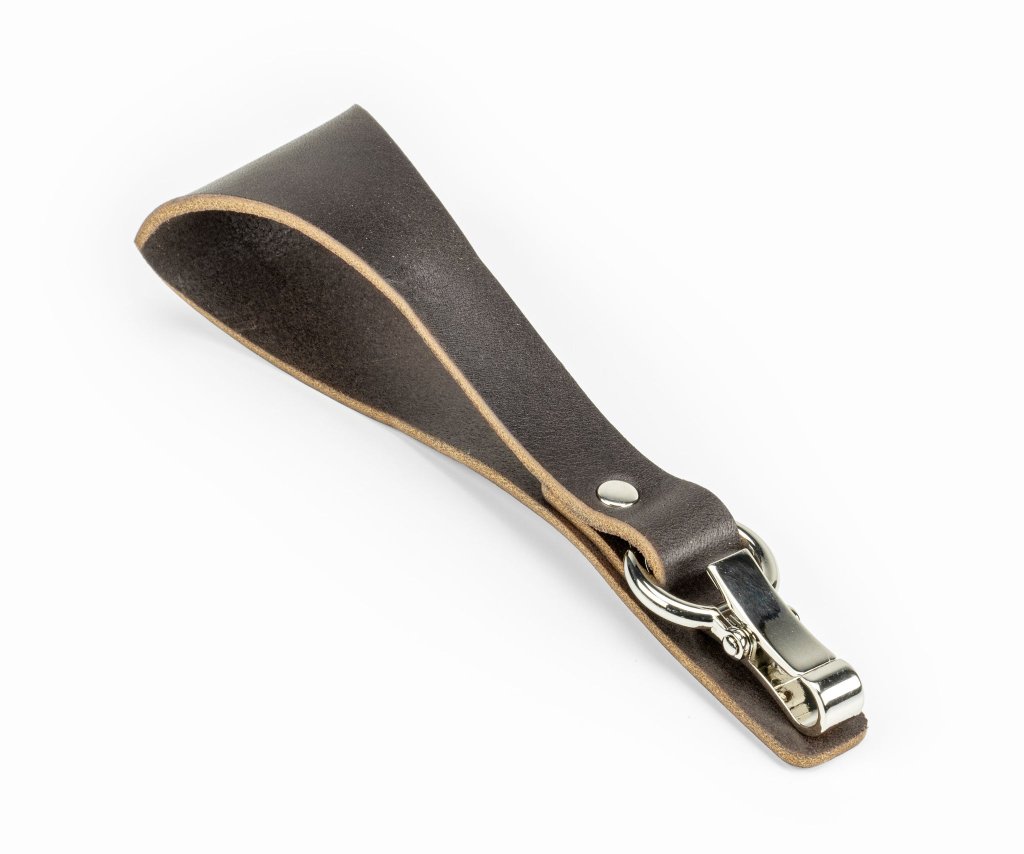
Covertec Wheel vs. D-Ring The two primary methods for wearing a lightsaber on a belt. A D-Ring is a simple metal loop attached to the pommel (common in the Original Trilogy). A Covertec Wheel is a small machined knob on the side of the hilt that slots into a specialized plastic belt clip (introduced in the Prequel Trilogy).
Weathering The process of artificially aging a hilt to make it look battle-worn and used. Techniques range from simple chemical blackening (Aluminum Black) to advanced Cerakote applications that simulate chipped paint, grime, and heat scoring.
Market Dynamics and Buying Jargon
The business side of lightsaber collecting is fraught with predatory practices. Understanding how items are sold is your best defense.
Run / Batch / Drop High-end empty hilts are rarely mass-produced. Independent makers organize a "Run," commissioning a machine shop to produce a limited number of hilts (e.g., 100 units). Once they sell out, they may never be made again.
Pre-Order / Group Buy Makers often collect funds upfront via a Pre-Order to finance the manufacturing run. This process can take anywhere from a few months to over a year. Delays are notorious in this industry, and communication is often poor.
LGT / TXQ Mass-market Chinese manufacturers that produce budget-friendly, mass-produced sabers. While they offer an entry point into the hobby, predatory sellers (often termed "dropshippers") will buy these in bulk and resell them at massive markups, falsely claiming they are custom or high-end pieces.
MHS (Modular Hilt System) A standardized system of interchangeable, threaded hilt parts pioneered by The Custom Saber Shop (TCSS). It allows users to screw together custom designs using standardized emitters, bodies, and pommels.
Flipper / Scalper Individuals who buy highly sought-after, limited-run hilts solely to immediately resell them on the secondary market at an exorbitant markup, exploiting collectors who missed the initial drop.
BST (Buy / Sell / Trade) The secondary market, primarily operating on Facebook groups and Reddit. It is a vital resource for finding out-of-production hilts, but requires vigilance to avoid scammers.
This glossary is a living document, subject to updates as the market evolves and new technologies emerge. Read it, learn from it, and navigate this wild ride with open eyes.
— Shing
References
- "What are Empty lightsaber hilts ?!" YouTube, Jul 25, 2018.
- "Lightsaber Components: Understanding the Basics." Ultrasabers Holocron.
- "The thin-necked lightsaber appreciation society." The RPF Forums, Apr 3, 2017.
- "Guide To Building Your Perfect, Custom Lightsaber." Ultrasabers Holocron.
- "Static LED vs RGB vs Neopixel: What's the Best Technology." Ultrasabers Holocron.
- "How to place Neo pixel strips in a lightsaber blade?" Facebook Custom Lightsaber Owners Group.
- "Third-Generation Neopixel Blade Testing." Reddit r/lightsabers.
- "Plecter Pixel Blade Construction." YouTube, Oct 31, 2018.
- "What kind of blade do heavy dueling lightsaber users use?" Reddit r/lightsabers.
- "7/8 Pixel Slimline Blade." Crimson Dawn.
- "An argument for DAY BLADES." The RPF Forums, Mar 2, 2023.
- "7/8 inch Diameter Blade." Vader's Vault.
- "What is a blade Plug? / Blade plug information." Saberforge Help Center.
- "Lightsaber Uses Pogo Pins To Make Assembly A Breeze." Hackaday, Nov 7, 2018.
- "Understanding Your Saber Corps Hilt | Saber Assembly." YouTube.
- "GOTH-3Designs." GOTH-3Designs Official Website.
- "Sabertrio Power Core Chassis Upgrade." YouTube.
- "Master Chassis Sabers." Shing.
- "Grand Master Chassis." Shing.
- "Building a CFX Neopixel Lightsaber with Crystal Chamber." YouTube, May 4, 2021.
- "The Eternal Debate- Proffie or CFX... or Golden Harvest or Verso." Solo Sabers LLC Blog, Apr 19, 2023.
- "What is Smooth Swing?" YouTube.
- "Understanding the Battery and Charger Options?" Saberforum, Jan 7, 2020.
- "Senza Masterpiece — Sabertrio Lightsaber." Adegans Armory.
- "SW_Lightsaber_Guide.pdf." WannaWanga, 2018.
- "Wearing Your Lightsaber: D-Ring vs Covertec Wheel." YouTube.
- "Cerakote weathering is BY FAR the best looking." Reddit r/lightsabers.
- "Lightsabers Buyers Guide & Weekly Question Thread." Reddit r/lightsabers.
- "For lightsaber noobs only! (MHS, MLS, RGB, etc.)." Saberforum, Sep 14, 2011.
- "Community Watch For Bad Sellers/Buyers/Traders." Rebelscum Forums.